
- All
- Product Name
- Product Keyword
- Product Model
- Product Summary
- Product Description
- Multi Field Search
 |


| Quantity: | |
|---|---|
In the demanding world of cold chain logistics, the integrity of a refrigerated truck's cargo hold is paramount. Every component must work in harmony to maintain precise temperatures, ensure hygiene, and withstand constant wear and tear. Among these critical components, the interior lining plays a pivotal role. This is where GFRP sheet technology shines. Glass Fiber Reinforced Plastic (GFRP) sheets, particularly supplied in convenient roll form, have emerged as the industry-preferred material for lining refrigerated truck bodies. Their unique combination of strength, hygiene, thermal efficiency, and ease of installation makes them an indispensable asset for manufacturers and fleet operators. This comprehensive guide delves into the specifics of GFRP sheet for refrigerated trucks, exploring the advantages of the roll format and providing detailed insights into the various thickness options—1.2mm GFRP sheet, 1.5mm GFRP sheet, 2mm GFRP sheet, 2.5mm GFRP sheet, and 3mm GFRP sheet—to help you select the perfect lining for your application.
A GFRP sheet roll is a continuous, flexible laminate composed of glass fibers embedded in a thermosetting polyester resin matrix. This composite material is manufactured in long, coiled sheets, making it distinct from rigid panel alternatives. The GFRP sheet in roll format offers unparalleled installation versatility. It can be seamlessly unrolled and bonded directly onto the core insulation material—typically XPS (Extruded Polystyrene), PU (Polyurethane), or EPS (Expanded Polystyrene) foam—that forms the refrigerated truck's wall, roof, and floor panels. This method creates a monolithic, joint-minimized surface that is incredibly strong, easy to clean, and resistant to moisture penetration.
The adoption of GFRP sheet for trucks, especially in cold transport, is driven by several compelling benefits. Firstly, GFRP offers exceptional mechanical strength and impact resistance, protecting the delicate insulation core from damage during loading and unloading. Secondly, it is completely impervious to water and moisture, preventing rot, mold, and a subsequent loss of insulating value. Thirdly, the surface is non-porous, chemically resistant, and easy to sanitize with high-pressure washers or cleaning agents, meeting stringent food safety standards like HACCP and FDA requirements. Finally, its lightweight nature contributes to better fuel efficiency and higher payload capacity compared to traditional metal linings.
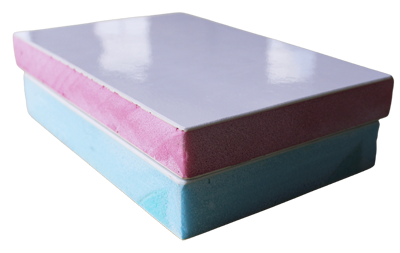
GFRP sheet for refrigerated trucks is engineered to excel in low-temperature, high-humidity environments. Unlike metals, it does not conduct cold, eliminating thermal bridges that can lead to condensation and ice buildup. This ensures the refrigeration unit operates more efficiently and maintains a consistent temperature throughout the cargo area. The material remains flexible and crack-resistant even in extreme sub-zero temperatures, guaranteeing long-term durability and reliability on the road.
The GFRP sheet roll format allows for large-area coverage with minimal seams. Fewer seams mean fewer places for dirt, bacteria, and moisture to accumulate, enhancing both hygiene and structural integrity. The sheets are typically bonded to the insulated core with high-strength adhesives, creating a permanent, robust bond that withstands the vibrations and stress of transportation. This seamless finish is not only more hygienic but also easier to maintain over the vehicle's lifespan.
Selecting the correct thickness is crucial for balancing performance, weight, and cost. Here, we explore the five standard thicknesses of GFRP sheet in roll for commercial vehicle applications.
The 1.2mm GFRP sheet represents the entry point for many light-duty or cost-sensitive applications. It provides a solid, hygienic barrier with excellent moisture resistance at a minimal weight. This thickness is often suitable for truck roofs or sides in applications with less demanding physical impact, or where weight savings are a critical priority. It offers a smooth, easy-to-clean surface perfect for general freight or less abrasive cargo.
Arguably the most versatile and commonly specified option, the 1.5mm GFRP sheet strikes an ideal balance between strength, weight, and cost. It delivers significantly improved impact and abrasion resistance compared to the 1.2mm variant, making it suitable for floors and walls in a wide range of refrigerated trucks transporting packaged goods, dairy, and produce. Its robustness handles frequent pallet movement better while still being easy to handle and install from a GFRP sheet roll.
When the application demands higher mechanical strength, the 2mm GFRP sheet is the preferred choice. This thickness is frequently specified for truck floors—areas subject to the greatest wear from forklift wheels, heavy pallets, and dropped items. The 2mm GFRP sheet provides a formidable barrier that protects the underlying PU or XPS foam from crushing and penetration, significantly extending the service life of the refrigerated truck body. It is a robust workhorse for distribution trucks and wholesale logistics.
For the most punishing environments, the 2.5mm GFRP sheet offers heavy-duty performance. This thickness is designed for industrial refrigerated trucks and trailers that transport bulk items, metal containers, or operate in rugged conditions where the risk of impact is very high. The extra thickness provides an exceptional safety margin against damage, ensuring the insulation remains intact and thermal efficiency is preserved. Specifying a 2.5mm GFRP sheet for high-impact zones is a strategic investment in longevity.
The 3mm GFRP sheet represents the premium tier of protection. It is used in specialty refrigerated trucks that may handle unusually heavy or sharp-edged cargo, or in applications where absolute maximum durability is non-negotiable, such as in military or mining cold chain operations. While it adds more weight, the 3mm GFRP sheet creates an almost indestructible interior surface that can withstand extreme abuse, making it the ultimate choice for ensuring a truck body survives well beyond its standard lifecycle.
The performance of a GFRP sheet for trucks is heavily dependent on proper installation. The surface of the insulation core (XPS, PU, or EPS) must be clean, dry, and free of dust. A high-quality, polyurethane-based contact adhesive is typically recommended for its strong bond and temperature resilience. The adhesive is applied evenly to both the back of the GFRP sheet roll material and the insulation panel.
The sheet is then carefully unrolled and positioned onto the panel. Using a roller, installers press from the center outward to remove air bubbles and ensure full contact. The GFRP sheet in roll format is ideal for this process, as it allows for large, seamless sections to be applied, especially on wall and roof panels. For corners and complex shapes, the material can be warmed to increase pliability, ensuring a tight, wrinkle-free fit that conforms perfectly to the truck body's contours.

Traditional metal linings, while strong, suffer from condensation, corrosion, and thermal bridging. GFRP sheet for refrigerated trucks is inherently corrosion-free, thermally insulating, and does not promote condensation. It is also quieter during transit and does not dent like metal.
FRP-coated plywood is heavier, can delaminate if water penetrates the edges, and is not available in a seamless roll format. A GFRP sheet roll provides a homogeneous, waterproof material without organic components that can rot.
Maintaining a GFRP sheet interior is straightforward. Routine cleaning with mild detergents and periodic sanitization with approved disinfectants is all that's required. The non-porous surface rinses clean easily, supporting rapid turnaround times between loads.
In the rare event of damage, sections of GFRP sheet for trucks can be repaired. Small punctures can be filled with compatible resin, while larger areas can be patched with a new piece of GFRP, adhesively bonded and sealed at the edges to maintain integrity.
Choosing the correct GFRP sheet in roll is a critical decision in refrigerated truck manufacturing and refurbishment. From the lightweight efficiency of a 1.2mm GFRP sheet to the supreme durability of a 3mm GFRP sheet, each thickness serves a specific purpose in building a reliable, efficient, and compliant cold chain vehicle. The GFRP sheet roll format, with its seamless installation benefits, coupled with the material's inherent strengths, makes it the superior lining solution for bonding to XPS, PU, and EPS insulation cores. By understanding your operational demands—cargo type, frequency of use, and expected impact—you can select the optimal GFRP sheet for refrigerated trucks to ensure durability, hygiene, and thermal efficiency for years to come. Invest in the right gauge, and protect your cargo, your reputation, and your bottom line.
Contact us:
Email: lzpanels@163.com
WhatsApp/Wechat: 008613702432446


