
- All
- Product Name
- Product Keyword
- Product Model
- Product Summary
- Product Description
- Multi Field Search
 |


| Quantity: | |
|---|---|
In the world of modern construction and transportation, material choice dictates durability, efficiency, and cost-effectiveness. Among the most versatile materials currently dominating these industries is the white fiber reinforced plastic sheet. Known for its strength, lightweight properties, and adaptability, this composite material is revolutionizing how we build roofs and construct truck bodies.
Whether you are a contractor looking for robust roofing solutions or a fleet owner aiming to optimize your cargo boxes, understanding the nuances of thickness options—specifically 1.2mm fiber reinforced plastic sheet, 1.5mm fiber reinforced plastic sheet, 2mm fiber reinforced plastic sheet, and 3mm fiber reinforced plastic sheet—is crucial. This guide delves deep into the applications, benefits, and technical specifications of these sheets for both roof and truck body applications.
Fiber reinforced plastic sheet (FRP) is a composite material made of a polymer matrix reinforced with fibers. The fibers are usually glass (in fiberglass), carbon, aramid, or basalt. For the purpose of roofing and truck bodies, the most common variant is fiberglass. The "white" designation refers to the pigmentation added during manufacturing, which provides UV resistance and aesthetic appeal.
The result is a fiber plastic sheet that combines the resilience of plastic with the tensile strength of reinforcing fibers. This synergy creates a product that is non-conductive, resistant to corrosion, and capable of withstanding extreme weather conditions.
The color white is not merely cosmetic. When used in roofing and transportation, white offers significant functional advantages:
Heat Reflection: White surfaces reflect sunlight, reducing heat absorption. For roofs, this lowers cooling costs. For fiber reinforced plastic sheet for truck body, it protects temperature-sensitive cargo in reefer (refrigerated) units.
Aesthetics: A clean, uniform white finish provides a professional look for building exteriors and truck fleets.
Light Transmission: In roofing applications, white sheets can be manufactured to allow diffused natural light while maintaining privacy and UV blockage.
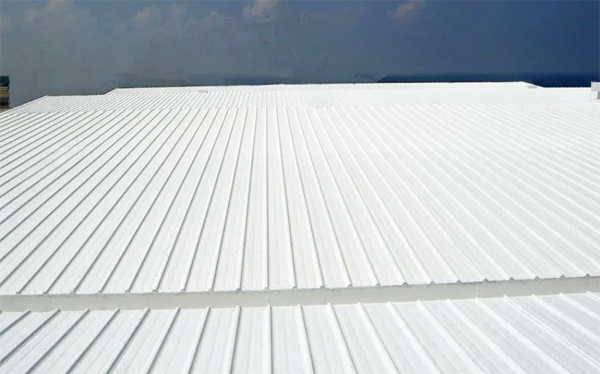
When it comes to roofing, flexibility in design is key. The fiber reinforced plastic sheet for roof is unique because it can be manufactured in two primary profiles: flat panels and corrugated sheets.
Flat white fiber reinforced plastic sheet options are ideal for modern architectural designs, skylights, and areas requiring a clean, flush fit. They offer a sleek appearance and are often used in:
Patio Covers: Providing shelter while allowing light to filter through.
Industrial Sheds: Used as clerestory windows or entire roofing sections where flat panels are preferred.
Walkways: Covered walkways between buildings.
1.2mm fiber reinforced plastic sheet: Suitable for light-duty applications like carports or small awnings where weight is a concern but some rigidity is still needed.
1.5mm fiber reinforced plastic sheet: The most common choice for residential and light commercial flat roofs, balancing flexibility and strength.
Perhaps the most traditional use of FRP in roofing is the corrugated profile. Corrugation adds immense structural rigidity to the sheet without significantly increasing weight. The fiber plastic sheet in a corrugated form is designed to interlock with metal roofing profiles (like tin or steel), making it the perfect material for:
Barns and Agricultural Buildings: Allowing natural light into animal shelters.
Warehouses: Replacing damaged metal sheets with translucent FRP to brighten interiors.
Canopies: Gas stations and loading bays often utilize corrugated FRP for durable, weather-resistant canopies.
2mm fiber reinforced plastic sheet: This is the industry standard for corrugated roofing. It provides the necessary strength to withstand hail, wind uplift, and the weight of installers during maintenance.
3mm fiber reinforced plastic sheet: Used in heavy industrial environments or areas prone to extreme weather (like heavy snow loads). It offers maximum impact resistance and longevity.
Q: Can I use the same fiber reinforced plastic sheet for both my house roof and my garden shed?
A: While you can, it depends on the thickness. For a garden shed, a 1.5mm fiber reinforced plastic sheet is usually sufficient. For a house roof (especially if it's a permanent structure), you should opt for a 2mm or 3mm fiber reinforced plastic sheet to meet building codes for impact resistance and load-bearing.
Q: Are corrugated FRP sheets difficult to install compared to metal?
A: No. Fiber reinforced plastic sheet for roof installation is very similar to metal roofing. They can be cut with a fine-tooth saw or shears and fastened with the same screws used for metal. However, it is important to use screws with neoprene washers to prevent leaks and allow for thermal expansion of the fiber plastic sheet.
Q: Do white FRP sheets yellow over time?
A: High-quality white fiber reinforced plastic sheet includes UV inhibitors in the resin. While some slight color shift may occur over decades of intense sun exposure, premium sheets are designed to resist yellowing and maintain light transmission properties for 20+ years.

The transportation industry demands materials that are tough, lightweight, and thermally efficient. This is where the fiber reinforced plastic sheet for truck body excels. Unlike roofing, where the sheet stands alone, in truck bodies, these sheets are typically used as the outer skin or inner liner bonded to a core material to create composite panels.
A truck body box is often constructed using a "sandwich" method. The core is typically plywood, XPS foam, or polyurethane foam, which provides insulation and structure. The outer layers are high-strength skins. The fiber reinforced plastic sheet serves as this skin.
Impact Resistance: FRP can absorb impacts from forklifts and cargo without denting, unlike aluminum or steel.
Corrosion Resistance: Road salts, chemicals, and moisture do not corrode FRP.
Weight Reduction: Replacing metal skins with FRP significantly lowers the overall weight of the truck, leading to better fuel economy and higher payload capacity.
Hygiene: The non-porous surface of a white fiber reinforced plastic sheet is easy to clean and sanitize, which is critical for food transport.
The choice of thickness depends entirely on the part of the truck being built. Is it the exterior wall, the interior lining, or the floor?
1.2mm fiber reinforced plastic sheet: Used for interior ceiling liners or sidewall liners in dry vans where protection from light abrasion is needed, but weight savings are paramount.
1.5mm fiber reinforced plastic sheet: A common choice for interior sidewall panels in dry freight vans. It offers a good balance of durability and cost.
2mm fiber reinforced plastic sheet: This is the "workhorse" for truck bodies. It is frequently used for exterior skins on dry vans and interior liners on refrigerated trucks where moderate impact resistance is required.
3mm fiber reinforced plastic sheet: Reserved for high-wear areas such as the lower 12 inches of a truck body wall (the "scuff liner") or for the flooring substrate. A 3mm fiber reinforced plastic sheet provides the rigidity needed to support cargo weight without flexing excessively.
In a standard dry van, the goal is to protect the cargo from the elements and secure it during transit. Here, the fiber reinforced plastic sheet for truck body acts as a durable liner.
Wall Liners: Protecting the sidewalls from shifting cargo.
Ceiling Liners: Preventing condensation drip and providing a smooth, clean surface.
Scuff Liners: The lower portion of the walls, often made from thicker 2mm or 3mm fiber reinforced plastic sheet, to withstand fork truck damage.
Refrigerated trucks require materials that can withstand temperature fluctuations and moisture. The white fiber reinforced plastic sheet is the gold standard here.
Thermal Efficiency: When laminated to foam cores, the FRP skin creates an airtight barrier that prevents thermal bridging.
Moisture Resistance: Unlike plywood liners, FRP does not rot or delaminate when exposed to the condensation and wash-down procedures common in food transport.
Food Safety: The white, smooth surface meets FDA standards for indirect food contact and can be pressure-washed.
Q: I am building a new refrigerated box truck. Why should I use a fiber reinforced plastic sheet for truck body instead of aluminum?
A: Aluminum conducts heat, which can compromise the insulation of a reefer. A fiber plastic sheet is a thermal break—it does not conduct heat or cold. Furthermore, aluminum dents permanently upon impact, whereas FRP tends to flex and return to shape. The white fiber reinforced plastic sheet also reflects sunlight, reducing the cooling load on the reefer unit.
Q: How do you attach a 1.5mm fiber reinforced plastic sheet to the plywood core of a truck wall?
A: The most effective method is using industrial adhesives (like two-part polyurethane or epoxy) in a lamination process. The adhesive bonds the FRP skin to the core, creating a single, structural fiber reinforced sheet panel. Mechanical fasteners (rivets with sealing washers) are used along the edges and for attaching the panel to the truck frame.
Q: Is a 2mm fiber reinforced plastic sheet strong enough for the floor of a truck box?
A: For light cargo, a 2mm sheet laminated to a thick plywood core can work. However, for heavy loads or if the FRP will be the walking surface, a 3mm fiber reinforced plastic sheet is recommended. Some heavy-duty applications even use textured or gritted surfaces on the fiber plastic sheet to provide slip resistance.
Q: Can I repair a damaged fiber reinforced plastic sheet on my truck body?
A: Yes, repair is one of the major advantages of FRP. Small cracks or holes can be filled with a polyester resin and glass mat kit, similar to fiberglass boat repair. For larger areas, a section of the panel can be cut out and a new piece of matching thickness (e.g., a 1.2mm fiber reinforced plastic sheet for liners) can be bonded and glassed into place.

To summarize the selection process, here is a breakdown of when to use each thickness for both roof and truck body applications.
Best For: Lightweight interior liners, ceiling panels in trucks, decorative ceilings, lightweight awnings.
Properties: Flexible, lightweight, easy to cut.
Limitations: Not suitable for high-impact areas or load-bearing roofs.
Best For: Residential flat roofing, sidewall liners in dry vans, signage.
Properties: Standard flexibility, good impact resistance for light abrasion.
Limitations: May bow under heavy snow loads if used for roofing without sufficient support.
Best For: Corrugated roofing, exterior truck body skins, reefer interior walls.
Properties: Excellent strength-to-weight ratio, resists fork truck impacts, ideal for structural sandwich panels.
Limitations: Heavier than 1.5mm, but still manageable for one-person installation in sheet form.
Best For: Truck floors, heavy-duty scuff liners, industrial flat roofing, blast-resistant panels.
Properties: Maximum rigidity, highest impact resistance, can support significant weight.
Limitations: Heavy; requires power tools for cutting and often two people to handle.
To get the most out of your fiber reinforced plastic sheet, proper installation is key.
Store the white fiber reinforced plastic sheet flat and supported to prevent warping. Keep it covered to protect from dirt and UV exposure until installation.
Fine-Tooth Blade: Use a circular saw or jigsaw with a fine-tooth blade (carbide-tipped is best) to prevent chipping.
Shears: For thinner sheets like 1.2mm fiber reinforced plastic sheet, heavy-duty metal shears can be used.
Safety: Always wear a dust mask and safety glasses when cutting FRP. The dust can be irritating.
Pre-drill: Drill holes slightly larger than the screw diameter to allow for thermal expansion.
Spacing: Follow local building codes, but generally, fasten at every third corrugation peak for corrugated sheets.
Seal: Use screws with EPDM rubber gaskets to create a watertight seal.
Surface Prep: Ensure the core material (plywood/foam) is clean, dry, and free of dust.
Adhesive Application: Apply a structural adhesive evenly using a notched trowel or roller.
Pressing: Apply uniform pressure to the fiber reinforced sheet and core. This can be done in a vacuum press, a hydraulic press, or by weighing down the panel until the adhesive cures.

The demand for fiber reinforced plastic sheet is growing. As industries push for sustainability, FRP offers a durable solution that reduces replacement frequency. In transportation, the shift towards electric vehicles (EVs) makes lightweight materials like FRP even more critical to offset battery weight.
Furthermore, advancements in resin technology are leading to the development of bio-based fiber plastic sheets, reducing the carbon footprint of manufacturing. The versatility of thicknesses—from the flexible 1.2mm fiber reinforced plastic sheet to the robust 3mm fiber reinforced plastic sheet—ensures that FRP will remain a staple material for decades to come.
Whether you are protecting a building from the elements or safeguarding valuable cargo across state lines, the white fiber reinforced plastic sheet stands as a testament to modern material science. Its adaptability allows it to serve as a lightweight fiber reinforced plastic sheet for roof—flat or corrugated—and as a structural, insulating skin as a fiber reinforced plastic sheet for truck body.
By understanding the specific properties of the 1.2mm fiber reinforced plastic sheet, 1.5mm fiber reinforced plastic sheet, 2mm fiber reinforced plastic sheet, and 3mm fiber reinforced plastic sheet, you can make an informed decision that balances cost, weight, and durability. This ensures that your next project, whether architectural or automotive, is built to last.
Contact us:
Email: lzpanels@163.com
WhatsApp/Wechat: +8613702432446


