
- All
- Product Name
- Product Keyword
- Product Model
- Product Summary
- Product Description
- Multi Field Search
 |


| Quantity: | |
|---|---|
In the demanding world of commercial transport, the integrity and efficiency of truck bodies, particularly for temperature-sensitive cargo, are paramount. The evolution from traditional materials to advanced composites has marked a significant leap forward. At the heart of this innovation lies GFRP sheet roll technology. Glass Fiber Reinforced Plastic (GFRP) sheets are engineered to provide exceptional strength, durability, and corrosion resistance, making them the ideal facing material for composite panels. These panels, constructed by bonding a GFRP sheet for composite panel to core materials like XPS (extruded polystyrene), PU (polyurethane) foam, EPS (expanded polystyrene), or honeycomb structures, create lightweight yet incredibly robust walls for refrigerated trucks (reefers) and dry freight vans. This article delves into the critical role of GFRP sheet rolls, with a specific focus on the essential width spectrum from 1800mm to 2600mm, in manufacturing superior truck box panels.
A GFRP sheet roll is a continuous, flexible laminate composed of glass fiber fabrics embedded in a thermosetting polyester or vinyl ester resin matrix. This combination yields a material with a high strength-to-weight ratio, excellent dimensional stability, and outstanding resistance to chemicals, moisture, and impact. Unlike metal alternatives, GFRP sheet does not corrode, rust, or dent easily, ensuring a longer service life and reduced maintenance for truck bodies. Its smooth, non-porous surface is easy to clean and sanitize, a crucial factor for food-grade transport. When used as the exterior and interior skin in a composite sandwich panel, the GFRP sheet for composite panel provides the primary structural tension and compression faces, while the core material handles shear stresses and provides insulation. This synergy results in a panel that is not only strong and rigid but also offers superior thermal efficiency for cold chain logistics.
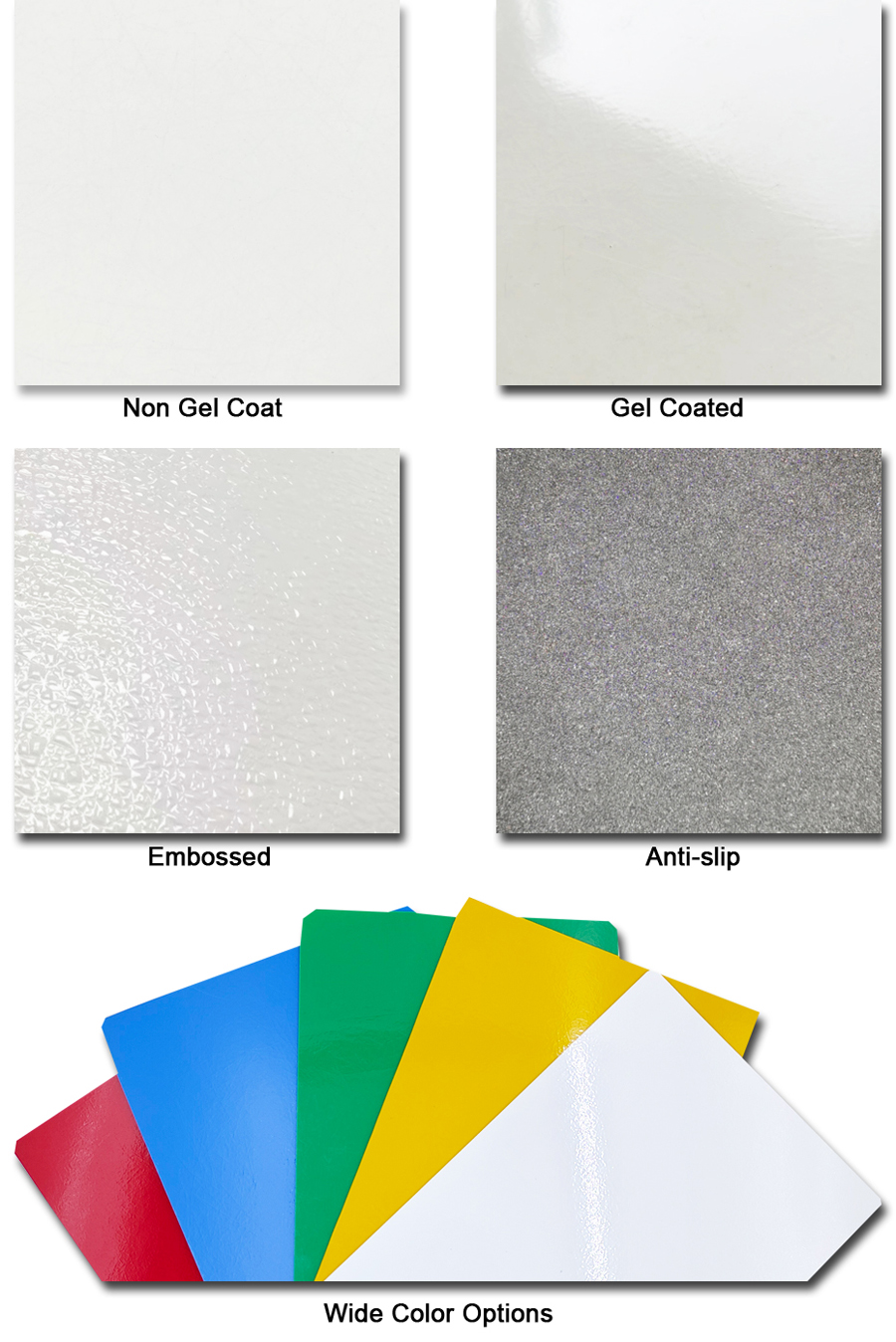
The width of a GFRP sheet roll is not a minor specification; it is a fundamental design and economic factor in composite panel production. Choosing the correct width minimizes waste, reduces seams, and optimizes production line efficiency. For the truck and trailer industry, a range of standard widths has emerged to accommodate various box sizes and designs. The spectrum from 1800mm GFRP sheet to 2600mm GFRP sheet covers the vast majority of manufacturing requirements. Utilizing a roll width that closely matches the panel height or length significantly reduces the need for lateral joins, enhancing the panel's structural integrity, aesthetic appeal, and waterproofing capabilities. This section explores why this specific width range is indispensable and how each dimension serves the market.
The 1800mm GFRP sheet is a versatile option often used for smaller commercial van bodies, specific interior linings, or compartmentalized sections within a larger truck. Its width is ideal for creating standard-sized panels where extreme width is not a constraint. This size allows for easier handling in fabrication shops with space limitations and is perfect for custom or specialized vehicle applications. Panels faced with 1800mm wide GFRP offer all the material benefits while providing a practical solution for manufacturers building niche or mid-sized transport solutions.
The 2000mm GFRP sheet and 2200mm GFRP sheet widths are among the most commonly requested in the industry for dry freight containers and trailer sides. These widths efficiently cover the standard wall heights of many box trucks and trailers, minimizing vertical seams. A panel made from a full-width GFRP sheet roll of this dimension ensures a clean, seamless appearance and unbroken barrier against moisture ingress. The use of a 2200mm GFRP sheet, in particular, can often cover a complete side panel in a single sheet, streamlining the lamination process and creating a stronger, more reliable final product.
When thermal efficiency is critical, as in refrigerated truck bodies, minimizing joints is even more vital to prevent thermal bridging. The 2300mm GFRP sheet and 2400mm GFRP sheet widths are engineered to meet the precise dimensions of many reefer unit panels. Their extra width allows for the creation of taller seamless walls, which is a key advantage in cold chain logistics. A panel utilizing a 2400mm GFRP sheet face can often span from floor to roof in standard designs, ensuring consistent insulation performance and structural uniformity across the cargo area. This directly contributes to better temperature control and lower energy consumption for the refrigeration unit.
For high-cube trailers and those requiring maximum interior volume, the 2500mm GFRP sheet and 2600mm GFRP sheet represent the premium end of the width spectrum. These large-format rolls are designed for the most efficient production of high wall panels. By using a 2600mm GFRP sheet, manufacturers can produce extraordinarily tall, single-piece panels that virtually eliminate the need for horizontal seams on the trailer's side. This not only enhances the aesthetic with a sleek, modern look but also provides unparalleled structural continuity and moisture protection. It represents the pinnacle of efficiency in modern panel lamination for large-scale commercial transport.
The performance of a composite truck panel is defined by its sandwich structure. The GFRP sheet for composite panel acts as the durable skin, but the core material defines its insulation and shear properties.
XPS (Extruded Polystyrene): Known for its high compressive strength and excellent moisture resistance, XPS is a popular choice for floor panels and applications where load-bearing is crucial.
PU (Polyurethane) Foam: This is the gold standard for refrigerated transport. PU foam offers one of the highest R-values (thermal resistance) per inch among core materials, creating highly efficient insulation. It bonds excellently to GFRP sheet during the lamination process.
EPS (Expanded Polystyrene): A cost-effective insulation core with good thermal performance, commonly used in dry vans and some reefer applications.
Honeycomb (Aluminum, or Plastic): Provides an exceptional strength-to-weight ratio, creating very light and rigid panels ideal for reducing tare weight and maximizing payload.
The GFRP sheet roll is laminated to these cores under controlled heat and pressure, creating a monolithic panel where each component enhances the other's properties.
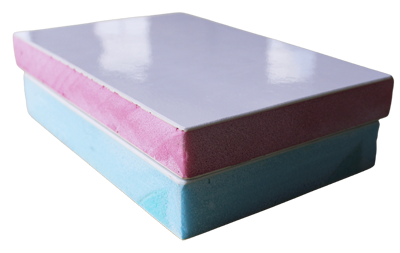
The use of continuous GFRP sheet roll in panel production offers distinct manufacturing benefits. It allows for automated, high-speed lamination processes where the sheet is unrolled directly onto the core material, ensuring consistent resin distribution and fiber alignment. This method is far more efficient than handling individual, pre-cut sheets. The availability of specific widths, from 1800mm GFRP sheet to 2600mm GFRP sheet, means production lines can be set up with minimal cutting and trimming, reducing labor time and material waste. Furthermore, the consistent quality across the roll ensures every panel produced has uniform mechanical properties and surface finish.
While the primary application is for truck box walls, roofs, and doors, the utility of these wide GFRP sheet rolls extends further. They are also used in:
Flooring Systems: Combined with a thick, high-density core for durability.
Interior Linings: Providing a hygienic, easy-to-clean surface for food-grade transport.
Dividers and Bulkheads: Creating strong, lightweight partitions within the cargo space.

The transition to composite panels has redefined durability, efficiency, and payload capacity in the transport industry. The availability of GFRP sheet roll in precise, industry-tailored widths—from the versatile 1800mm GFRP sheet to the expansive 2600mm GFRP sheet—is a cornerstone of this innovation. By selecting the appropriate width of GFRP sheet for composite panel, manufacturers can optimize their processes, minimize weaknesses, and build truck bodies that are stronger, lighter, and more insulated than ever before. Whether bonded to insulating PU foam for a frozen food reefer or to a lightweight honeycomb for a dry freight trailer, the right GFRP sheet is the critical component ensuring the panel performs flawlessly over millions of miles. Investing in the correct specification is not just a material choice; it's a strategic decision for building the future of transport.
Contact us:
Email: lzpanels@163.com
WhatsApp/Wechat: 0086613702432446


