
- All
- Product Name
- Product Keyword
- Product Model
- Product Summary
- Product Description
- Multi Field Search
 |


| Quantity: | |
|---|---|
In the world of industrial and construction materials, Fiber Reinforced Plastic (FRP) sheets have emerged as a versatile and durable solution for demanding applications. Specifically engineered with UV stabilization, these sheets offer exceptional resistance to weathering, corrosion, and physical impact. Available in a spectrum of colors including brown, yellow, black, red, blue, grey, and white FRP sheet options, they provide both functional and aesthetic benefits. Their adaptability is further enhanced by customizable thickness, width, and length, as well as a choice between glossy and matte finishes. This article delves deep into the properties, applications, and advantages of these multi-purpose sheets, focusing on their critical roles in truck body manufacturing, roofing systems, and cooling tower construction.
UV stabilization is a critical manufacturing process that involves incorporating special additives into the FRP matrix. These additives absorb or screen out harmful ultraviolet rays from sunlight, preventing the polymer matrix from degrading. Without this protection, prolonged sun exposure can lead to chalking, color fading, loss of gloss, and a reduction in mechanical strength. UV stabilized FRP sheets maintain their structural integrity, color vibrancy, and surface finish over decades, even in harsh outdoor environments. This makes them ideal for long-term applications where direct and constant sunlight exposure is inevitable.
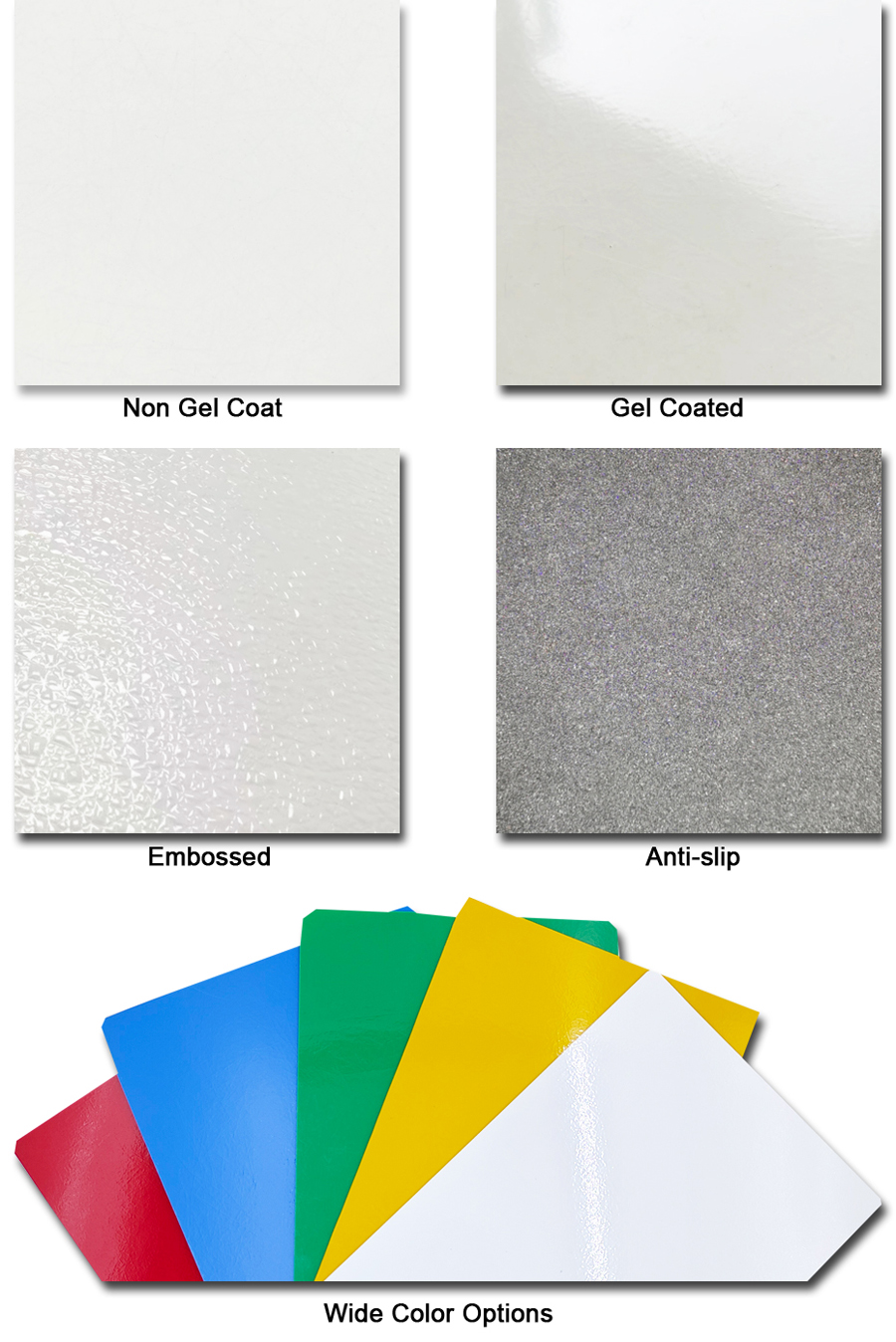
The availability of multiple colors is not merely an aesthetic choice; it serves practical purposes in different industries, from heat reflection to brand alignment and visual comfort.
Brown FRP sheets are often chosen for their natural, earthy appearance, which blends well with certain architectural styles or industrial settings. In a matte finish, they provide a non-reflective, robust surface.
High-visibility yellow FRP sheet is crucial for safety and identification. It's commonly used in truck bodies for hazardous material transport or on roofing sections to denote specific areas. Both glossy and matte versions are available.
A black FRP sheet is excellent for applications requiring heat absorption or a sleek, modern look. The matte black variant is particularly popular for low-glare, professional appearances on specialty vehicles or contemporary buildings.
Red FRP sheet materials are highly visible and are often used for branding, warning signs, or to meet specific corporate color schemes on commercial truck fleets and industrial structures.
The blue FRP sheet offers a calm, corporate appearance and is frequently selected for industrial roofing and cooling towers where a specific visual standard is required. Sky-blue sheets can also help with light diffusion.
A versatile and neutral option, the grey FRP sheet is a staple in many industries. It hides dirt well and provides a clean, professional look for both truck body panels and industrial cladding.
The white FRP sheet is exceptionally popular for roofing and cooling towers due to its high solar reflectance. It helps in reducing heat buildup inside structures, improving energy efficiency. A glossy white finish can enhance light reflection, while a matte finish offers a softer appearance.
Finish Options: Each color can be manufactured in either a glossy or matte finish. Glossy finishes are easier to clean and offer higher light reflectivity, while matte finishes provide a non-slip surface and reduce glare, which is often preferred in certain working environments.
One of the standout features of these FRP sheets is their high degree of customization. They are not one-size-fits-all products.
Thickness: Ranging typically from 1mm to 5mm or more, thickness is selected based on the required strength, rigidity, and insulation properties. Truck bodies may use thicker sheets for impact resistance, while roofing might use slightly thinner, more flexible sheets.
Width & Length: Sheets can be produced in standard or custom widths and lengths to minimize on-site joints and waste, ensuring seamless installation for large roofing projects or full-length truck body panels.
The transportation industry demands materials that are lightweight yet strong, durable, and low-maintenance. FRP sheet for Truck Body applications perfectly meets these criteria. Compared to traditional materials like aluminum or steel, FRP sheets offer superior corrosion resistance, especially against road salts and chemicals. Their lightweight nature translates directly into increased payload capacity and better fuel economy for fleet operators.
For truck body construction, the UV stabilized FRP sheet is primarily used in its flat panel form. It is laminated onto various core materials—such as plywood, foam, or honeycomb composites—to create strong, insulated, and lightweight sandwich panels. This composite structure provides an excellent strength-to-weight ratio, thermal insulation for refrigerated trucks, and a smooth, seamless interior surface that is easy to clean.
Color choice for truck bodies often revolves around corporate branding, visibility, and practicality. A white FRP sheet is common for refrigerated trucks due to its heat reflectivity. Blue, red, or grey FRP sheet colors are chosen for brand identity. A matte finish is often preferred for sides and roofs to reduce glare, while a glossy finish might be used for graphic areas to make decals pop.

FRP sheet for Roofing has become a preferred material for factories, warehouses, agricultural buildings, and skylights. Its combination of weather resistance, light transmission capability, and structural strength is unmatched. Unlike metal, it does not rust or corrode, and unlike polycarbonate, it has better resistance to a wider range of chemicals and maintains its properties over a longer period.
For roofing, FRP sheets are most commonly fabricated into corrugated profiles (like box rib or corrugated). This shape adds significant structural strength, allowing for wider support spans and efficient water runoff. Flat sheets are also used for gutter linings, flat roof sections, or interior lining. The choice depends on the architectural design and structural requirements.
A key advantage in roofing is the ability to create translucent FRP sheets (often called daylighting panels or clear white FRP sheet variants) that allow natural light to filter through, reducing the need for artificial lighting during the day. Opaque sheets in colors like brown, grey, or blue FRP sheet are used for the solid roofing areas. Combining both creates an energy-efficient, well-lit workspace.
Color selection directly affects thermal performance. A white FRP sheet or a light grey FRP sheet reflects most solar radiation, keeping buildings cooler. Darker colors like black or brown FRP sheet absorb heat, which might be desirable in colder climates. The UV stabilization ensures these colors do not fade, preserving the building's appearance and reflective properties.

Cooling towers operate in extremely demanding environments—constantly exposed to water, chemical treatment vapors, and sun. FRP sheet for Cooling Tower construction is the material of choice because it is impervious to corrosion, rust, and rot. Its non-porous surface prevents biofilm growth, and its strength can withstand high winds and mechanical loads.
Similar to roofing, corrugated profiles are standard for cooling tower casing and fan stacks, providing excellent strength with minimal weight. Manufacturers also offer various specialty profiles and shapes to meet specific aerodynamic and structural needs of different cooling tower designs, from small industrial units to large power plant installations.
Color in cooling towers often relates to client specifications, plant aesthetics, or functional needs. A grey FRP sheet is a common, neutral choice. Blue FRP sheet is also popular for its industrial aesthetic. Lighter colors like white FRP sheet help in reflecting heat away from the tower structure. The consistent color provided by UV-stabilized pigments ensures the tower maintains a clean, professional look for years.
The combination of chemical resistance (from the resin matrix) and UV resistance (from stabilization) means that FRP sheet for Cooling Tower applications requires minimal maintenance. It will not corrode like metal or degrade like untreated plastics, leading to a significantly longer service life and lower total cost of ownership.

Selecting the correct FRP sheet involves several factors:
Application: Define the primary use—Truck Body, Roofing, or Cooling Tower—as this dictates the preferred profile (flat vs. corrugated) and base performance requirements.
Environmental Exposure: Consider the levels of UV exposure, chemical contact, and mechanical impact to ensure the sheet's specifications are robust enough.
Color & Finish: Choose a color based on functional needs (heat reflection/absorption, visibility) and aesthetic preferences. Decide between glossy for cleanability/reflectivity or matte for glare reduction.
Dimensions: Work with your supplier or engineer to determine the optimal thickness for load-bearing requirements and the panel sizes to minimize installation complexity.
UV stabilized brown, yellow, black, red, blue, grey, and white FRP sheet products represent a pinnacle of material engineering. Their ability to be tailored in color, finish, thickness, and profile makes them indispensable across three critical industries: transportation, construction, and industrial cooling. Whether it’s the durable FRP sheet for Truck Body that keeps goods safe, the insulating and light-diffusing FRP sheet for Roofing that covers vast factories, or the corrosion-defying FRP sheet for Cooling Tower that supports essential infrastructure, this material delivers proven performance, longevity, and value. By understanding the specific options and applications, engineers, architects, and fleet managers can make informed decisions to optimize their projects for decades to come.
Contact us:
Email: lzpanels@163.com
WhatsApp/Wechat: 008613702432446


