
- All
- Product Name
- Product Keyword
- Product Model
- Product Summary
- Product Description
- Multi Field Search
 |


| Quantity: | |
|---|---|
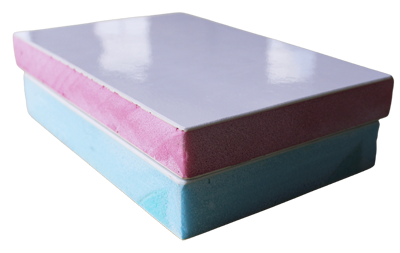
In the rapidly evolving industries of modular construction and commercial transportation, material selection directly impacts durability, weight, cost efficiency, and long-term performance. Among the most advanced solutions available today is the Fiberglass (FRP/GRP) Panel Sheet Made with Unsaturated Polyester Resin for Making Sandwich Panel – a high-performance composite designed to serve as the ideal outer skin for sandwich panel structures.
This versatile material is manufactured using premium unsaturated polyester resin reinforced with either Chopped Strand Mat (CSM) or Woven Roving fiberglass mat. The result is a product that combines high strength, lightweight properties, exceptional corrosion resistance, and complete moisture protection. Available in both rigid flat panel and flexible roll (coil) formats, this composite is extensively used for bonding with various core materials (such as PU foam, XPS, honeycomb, or mineral wool) to create finished sandwich panels for building walls, refrigerated trucks, dry vans, cargo containers, and industrial enclosures.
Whether you are a sandwich panel manufacturer, a fleet operator, or a construction contractor, understanding the technical and economic advantages of this material is essential. Throughout this article, we will explore every aspect of this composite – from its chemical composition to its real-world applications – and conclude with a detailed Q&A section addressing common engineering and procurement concerns.
To appreciate the performance of this composite, one must first understand its raw materials and production process. The FRP Sheet made with Unsaturated Polyester Resin is a thermoset composite where glass fiber reinforcements – either CSM (randomly oriented chopped strands) or Woven Roving (directional, high-tensile fabric) – are fully impregnated with liquid unsaturated polyester resin and then cured under controlled heat and pressure.
Unsaturated polyester resin serves as the polymer matrix that binds the glass fibers together. Once cured, it provides:
Rigidity and dimensional stability – The thermoset nature ensures the sheet does not soften or deform under moderate heat.
Chemical resistance – Excellent protection against acids, alkalis, solvents, and road salts.
Moisture barrier properties – Nearly zero water absorption, making it ideal for humid or wash-down environments.
CSM (Chopped Strand Mat): Randomly oriented fibers provide isotropic (equal in all directions) strength. This is ideal for general-purpose sandwich panels where uniform impact resistance is required, such as wall cladding.
Woven Roving: Woven fabric layers provide directional high tensile strength. This is preferred for structural applications like truck flooring or roof panels that experience bending loads.
Rigid Flat Panels: Available in thicknesses from 1.0mm to 5.0mm, these are ready for direct lamination to rigid cores like XPS or honeycomb.
Flexible Rolls (Coils): For continuous production lines, the FRP Sheet for Making Sandwich Panel supplied in rolls (up to 200 meters) enables high-speed automated lamination and conforms to curved sandwich designs.
The same product is globally recognized as GRP Sheet made with Unsaturated Polyester Resin (Glass Reinforced Plastic) or Fiberglass Sheet made with Unsaturated Polyester Resin – all terms referring to the same high-performance composite family.

When selecting a skin material for sandwich panels, engineers evaluate five critical criteria: strength-to-weight ratio, environmental durability, surface finish, bondability, and total cost of ownership. The FRP Panel made with Unsaturated Polyester Resin excels in all five categories.
Sandwich panels require stiff, strong skins that can carry tensile and compressive loads while the core handles shear stresses. With a density of approximately 1.4–1.6 g/cm³ and tensile strength exceeding 100 MPa (depending on reinforcement), GRP Panel made with Unsaturated Polyester Resin offers superior mechanical performance per unit weight compared to steel or aluminum.
Unlike metal skins that rust or corrode when exposed to moisture, chemicals, or salt spray, Fiberglass Panel made with Unsaturated Polyester Resin is inherently inert. This makes it the material of choice for:
Refrigerated truck bodies (exposed to road salts and temperature cycling)
Livestock trailers (exposed to ammonia and biological acids)
Chemical plant wall cladding (exposed to corrosive fumes)
Marine containers (exposed to saltwater)
Because FRP made with Unsaturated Polyester Resin has a closed, non-porous surface, it absorbs virtually no water. When bonded to a core material with a structural adhesive, the finished sandwich panel becomes a fully waterproof composite. This prevents core degradation (e.g., foam disintegration or honeycomb corrosion) and eliminates mold growth – a critical advantage for cold storage and food processing facilities.
The surface of GRP made with Unsaturated Polyester Resin can be manufactured with a smooth or matte finish. For sandwich panel production, a matte (non-glossy) surface is often preferred because it provides superior mechanical interlocking with polyurethane adhesives, epoxy resins, or direct foaming processes. This ensures a strong, long-lasting skin-to-core bond that resists delamination.
A 3mm thick Fiberglass made with Unsaturated Polyester Resin skin weighs approximately 4.5 kg/m², compared to 23.5 kg/m² for 3mm steel. This weight reduction translates directly into:
Lower fuel consumption for trucks and trailers
Easier manual handling during panel assembly
Reduced structural support requirements for building installations
Lower shipping costs for finished sandwich panels
The FRP Sheet for Making Sandwich Panel is not a generic commodity – it is an engineered solution for specific, demanding applications. Below are the primary industries that rely on this composite.
Manufacturers of reefers (refrigerated trucks) use FRP Sheet made with Unsaturated Polyester Resin as the interior and exterior lining. The interior skin must withstand frequent wash-downs with detergents and sanitizers, while the exterior faces road debris, UV exposure (when UV-stabilized resin is used), and temperature extremes. A typical sandwich panel for a reefer consists of:
Outer skin: 1.5mm to 3mm GRP Sheet made with Unsaturated Polyester Resin (UV-resistant grade)
Core: 50–100mm polyurethane foam
Inner skin: 1.5mm to 3mm Fiberglass Sheet made with Unsaturated Polyester Resin (food-contact safe)
In modular and prefabricated construction, speed of assembly and durability are paramount. FRP Panel made with Unsaturated Polyester Resin bonded to honeycomb or EPS foam creates lightweight, high-strength wall panels that can be installed in hours rather than days. These panels are commonly used for:
Portable site offices
Cleanrooms (smooth, non-shedding surface)
Agricultural buildings (resistant to manure and cleaning chemicals)
Temporary disaster relief shelters
Logistics companies are increasingly switching from traditional plywood-lined dry vans to GRP Panel made with Unsaturated Polyester Resin-faced sandwich panels. Why? Because plywood absorbs moisture, rots, harbors bacteria, and adds significant weight. An FRP-faced panel:
Does not rot or absorb moisture
Can be easily cleaned and sanitized
Provides a smooth, low-friction surface for cargo loading
Lasts 3–5 times longer than plywood
Chemical plants, wastewater treatment facilities, and battery manufacturing plants require wall materials that resist corrosion without requiring constant repainting. Fiberglass Panel made with Unsaturated Polyester Resin is directly bonded to a mineral wool core (for fire resistance) or foam core (for insulation) to create composite wall panels that are installed as a rainscreen cladding system. These panels require zero maintenance over decades of service.
In this section, we address the most frequently asked questions from sandwich panel manufacturers, engineers, and procurement specialists. All answers are based on real-world production data and field performance.
A: There is no technical difference. FRP stands for Fiber-Reinforced Plastic, while GRP stands for Glass-Reinforced Plastic. Both terms refer to the same composite material, where glass fibers provide reinforcement within a polymer (unsaturated polyester resin) matrix. The choice of terminology is regional – FRP is more common in North America, while GRP is widely used in Europe and Asia. In this article, FRP Sheet made with Unsaturated Polyester Resin and GRP Sheet made with Unsaturated Polyester Resin are functionally identical.
A: Standard unsaturated polyester resin is not UV-stable and will exhibit surface chalking and fiber blooming after prolonged sunlight exposure. However, Fiberglass Sheet made with Unsaturated Polyester Resin can be manufactured with UV-inhibitors or a UV-resistant gel coat for outdoor applications. For sandwich panels intended for exterior use (truck bodies, building exteriors), always specify UV-stabilized grade.
A: The FRP Panel made with Unsaturated Polyester Resin exhibits excellent adhesion to a wide range of core materials using appropriate structural adhesives or direct foaming. Common core materials include:
Polyurethane (PU) foam – Ideal for thermal insulation in reefer trucks and cold storage.
Polystyrene (EPS/XPS) – Economic choice for building insulation.
Aluminum or aramid honeycomb – For high-strength, lightweight structural panels (e.g., aerospace or racing floors).
Mineral wool – For fire-rated building partitions.
Balsa wood – For marine and high-load flooring.
A: Standard GRP Panel made with Unsaturated Polyester Resin is combustible. However, fire-retardant (FR) grades are available by using halogenated or phosphorus-based unsaturated polyester resins. These FR grades can achieve UL 94 V-0, BS 476 Class 1, or DIN 4102 B1 ratings. For applications requiring fire safety (public buildings, mass transit), always request certified fire-retardant FRP.
A: On a per-square-meter basis, Fiberglass made with Unsaturated Polyester Resin typically costs 1.5 to 2 times more than mild steel but is significantly cheaper than aluminum of equivalent stiffness. However, total cost of ownership analysis favors FRP because:
Steel requires painting or galvanizing (added cost and weight).
Aluminum suffers from galvanic corrosion when in contact with other metals.
FRP requires no painting, no corrosion protection, and minimal maintenance over a 20+ year service life.
A: The FRP Sheet for Making Sandwich Panel is available from 0.8mm to 6.0mm in standard increments. For most sandwich panel applications:
1.0–1.5mm: Interior liners (light duty)
2.0–3.0mm: General-purpose wall skins and truck side panels
4.0–6.0mm: Heavy-duty flooring, military containers, impact-resistant cladding
Roll widths range from 500mm to 2500mm, and flat panel sizes can be customized up to 4000mm x 2000mm.
A: Yes, FRP made with Unsaturated Polyester Resin can be bonded to plywood using epoxy or polyurethane adhesives. However, this is not a true sandwich panel (since plywood is not a lightweight core). For maximum performance, we recommend replacing plywood entirely with an FRP-faced foam or honeycomb sandwich panel – achieving the same stiffness at 40–50% less weight.
A: The non-porous surface of GRP Sheet made with Unsaturated Polyester Resin is ideal for food processing environments. Standard cleaning protocols include:
Daily washing with mild detergent and warm water.
Periodic sanitizing with diluted bleach (sodium hypochlorite) or quaternary ammonium compounds.
Avoid abrasive pads or steel wool, which can scratch the gel coat surface. Maintenance is typically limited to visual inspection and re-caulking of panel joints.
A: Absolutely. The FRP Sheet for Making Sandwich Panel supplied in rolls is specifically engineered for continuous double-belt lamination systems. The roll stock unwinds smoothly, passes through adhesive applicators, and bonds to the core material in a single continuous process. This is the most cost-effective method for producing large volumes of foam-core sandwich panels.
A: This is a critical distinction. Cured FRP Sheet made with Unsaturated Polyester Resin (ready for use) has an indefinite shelf life if stored away from UV exposure. However, uncured (B-stage) roll stock – which requires heat curing after lamination – typically has a shelf life of 30–60 days when stored below 25°C. Always check the technical data sheet from your supplier.
To assist engineers in specifying the correct material, below are standard and customizable parameters for FRP/GRP Panel Sheet Made with Unsaturated Polyester Resin.
| Parameter | Standard Range | Custom Options |
|---|---|---|
| Thickness | 1.0mm – 5.0mm | 0.8mm – 6.0mm |
| Width (roll) | 1200mm, 1500mm, 2000mm | Up to 2500mm |
| Length (roll) | 50m, 100m, 200m | Custom lengths |
| Flat panel size | 2440mm x 1220mm | Up to 4000mm x 2000mm |
| Reinforcement | CSM (100–600 g/m²) | Woven roving (200–800 g/m²), combination mat |
| Resin type | Orthophthalic (general) | Isophthalic (superior corrosion resistance), Fire-retardant, UV-stabilized |
| Surface finish | Matte, gloss, textured | Anti-slip (grit-coated), smooth food-grade |
| Color | White (standard) | RAL colors, custom pigmentation |
| Density | 1.4 – 1.6 g/cm³ | Varies with fiber/resin ratio |
| Tensile strength | 80 – 150 MPa (depends on reinforcement) | Higher with woven roving |
For sandwich panel applications requiring fire certification, specify FRP made with Unsaturated Polyester Resin with flame-retardant additives achieving LOI (Limiting Oxygen Index) ≥ 28%.
Achieving maximum structural performance from GRP Panel made with Unsaturated Polyester Resin requires proper surface preparation and adhesive selection.
Although Fiberglass Panel made with Unsaturated Polyester Resin bonds well, contaminants like mold release agents (used during manufacturing) must be removed. Recommended procedure:
Wipe the bonding surface with isopropyl alcohol or acetone.
Lightly abrade with 80–120 grit sandpaper to create mechanical keying.
Remove dust with a clean, lint-free cloth.
For bonding to foam cores:
Two-component polyurethane adhesive: Excellent for PU and EPS foam.
Epoxy adhesive: Highest strength, suitable for honeycomb and metal cores.
For direct foaming (where liquid polyurethane foam is injected between two FRP skins), the liquid foam itself acts as the adhesive upon expansion and curing. This method produces the strongest possible bond because the foam chemically bonds to the unsaturated polyester surface.
If using B-stage FRP Sheet for Making Sandwich Panel (uncured), the entire sandwich assembly must be placed in a heated press or conveyor oven to complete resin cross-linking. Typical cure cycle: 80°C for 2–4 hours. Finished panels can be cut with carbide-tipped circular saws or CNC routers.
Not all Fiberglass made with Unsaturated Polyester Resin is created equal. Professional manufacturers differentiate themselves through:
Consistent resin-to-glass ratio – Ensures predictable mechanical properties.
Full cure verification – Barcol hardness testing to confirm no under-cure.
Flatness and thickness tolerance – Typically ±0.1mm for flat panels.
Roll winding tension control – Prevents telescoping or wrinkles in roll stock.
Custom color matching – Using pigment pastes compatible with unsaturated polyester.
When you purchase FRP Sheet made with Unsaturated Polyester Resin for high-volume sandwich panel production, consistency is not a luxury – it is a requirement for avoiding production stoppages and rejected panels.
From refrigerated trailers crossing continents to modular cleanrooms in pharmaceutical plants, the Fiberglass (FRP/GRP) Panel Sheet Made with Unsaturated Polyester Resin for Making Sandwich Panel has proven itself as a superior engineering material. Its unique combination of high strength, lightweight construction, corrosion resistance, and complete waterproofing makes it irreplaceable in demanding environments.
Whether you need FRP Sheet made with Unsaturated Polyester Resin in rigid flat panels for custom fabrication or GRP Sheet made with Unsaturated Polyester Resin in long rolls for continuous lamination lines, this composite delivers long-term value. By selecting the appropriate reinforcement (CSM for uniform strength or Woven Roving for directional strength), resin formulation (general, fire-retardant, or UV-stabilized), and surface finish, you can tailor the material to meet the exact requirements of your sandwich panel application.
For technical datasheets, sample requests, or volume pricing, contact us today. Invest in Fiberglass made with Unsaturated Polyester Resin – and build sandwich panels that last.
Contact information:
Email: lzpanels@163.com
WhatsApp/Wechat: +8613702432446


