
- All
- Product Name
- Product Keyword
- Product Model
- Product Summary
- Product Description
- Multi Field Search
 |


| Quantity: | |
|---|---|
In the highly demanding world of refrigerated transport, the integrity of the trailer body is not just a matter of structural soundness but a critical factor in preserving cargo quality, ensuring energy efficiency, and meeting stringent regulatory standards. Among the various materials vying for dominance in this sector, one has consistently proven its superior capabilities: the fibreglass reinforced polyester resin wall panel. This advanced composite material represents a significant leap forward from traditional options like aluminum and plywood, offering an unparalleled blend of thermal efficiency, structural strength, and durability. This comprehensive article delves into the multifaceted advantages, technical specifications, and transformative impact of this innovative solution for modern cold chain logistics. We will explore why the fibreglass reinforced polyester resin panel is increasingly becoming the material of choice for trailer manufacturers and fleet operators who prioritize performance and total cost of ownership.
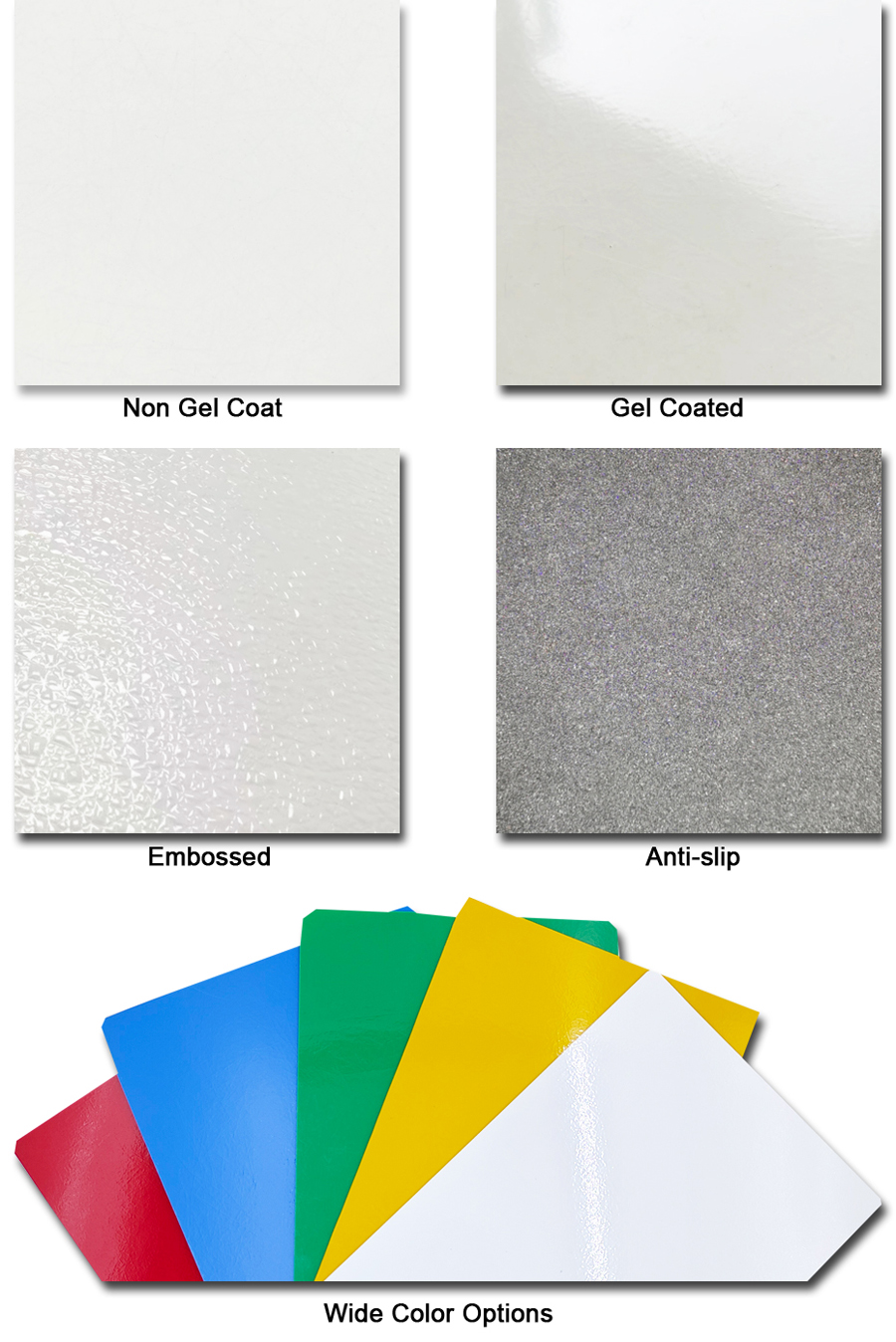
To appreciate its application in refrigerated trailers, one must first understand the fundamental composition of this material. A fibreglass reinforced polyester panel is a composite structure created by embedding glass fibres into a matrix of polyester resin. This synergy creates a material that possesses the best properties of its individual components.
The strength of this composite lies in the complementary relationship between the fibreglass and the resin. The polyester resin acts as a durable, rigid, and chemically resistant binder. It is responsible for the panel's shape, surface hardness, and resistance to environmental degradation. The fibreglass, composed of fine glass filaments, acts as the reinforcement. These fibres provide exceptional tensile strength, preventing the brittle resin from cracking under stress and impact. The result is a fibreglass polyester resin wall panel that is remarkably strong yet lightweight, a crucial characteristic for maximizing payload capacity in transport.
The manufacturing of these panels typically involves processes like pultrusion or continuous lamination. In these methods, layers of fibreglass matting are saturated with liquid polyester resin and then passed through a die or mold under controlled heat and pressure. This cures the resin and bonds the entire structure into a solid, homogeneous reinforced polyester resin panel. This process ensures consistent quality, eliminates voids, and allows for the integration of a high-performance foam core, which we will discuss later.
The adoption of the fibreglass panel for refrigerated trailer applications is driven by a host of tangible benefits that directly address the unique challenges of temperature-controlled transport.
The primary function of a refrigerated trailer is to maintain a stable internal temperature. The structural design of a fibreglass reinforced polyester resin wall panel is inherently conducive to excellent thermal performance. These panels are almost always manufactured as sandwich panels, with a core of rigid polyurethane (PUR) or polyisocyanurate (PIR) foam laminated between two solid skins of the composite. This creates a continuous, seamless layer of insulation with an extremely low thermal conductivity (K-value). Unlike traditional constructions with metal rails that create thermal bridges—paths for heat to enter or escape—the monolithic nature of a foam-cored fibreglass polyester panel minimizes energy transfer. This leads to reduced fuel consumption for the refrigeration unit and more precise temperature control.
Despite being lightweight, the reinforced polyester panel exhibits exceptional mechanical strength. It has a high strength-to-weight ratio, meaning it can withstand the rigors of road vibration, impacts from loading equipment, and flexing without cracking or deforming. The toughness of the fibreglass reinforced polyester resin panel makes it highly resistant to denting, a common issue with aluminum skins. This durability translates into lower maintenance costs and a longer service life for the trailer body, protecting the investment of fleet owners.
Refrigerated environments are harsh, subjecting walls to constant moisture, condensation, and frequent washdowns with aggressive cleaning chemicals. Aluminum is prone to corrosion, and wood can rot and delaminate. In contrast, a fibreglass polyester resin wall panel is completely impervious to rust and rot. The non-porous surface of the polyester resin is highly resistant to a wide range of chemicals, salts, and biological growth, ensuring the panel's integrity and hygienic properties remain intact throughout its lifespan. This makes the fibreglass reinforced polyester resin wall panel ideal for transporting a diverse range of goods, from food products to pharmaceuticals.
In freight transport, every kilogram saved in tare weight is a kilogram added to potential revenue-generating payload. The lightweight nature of the fibreglass polyester panel for trailer body construction is a significant economic advantage. By replacing heavier materials, fleet operators can increase their cargo capacity without violating weight regulations, leading to higher profitability per trip.
A deeper look into the specifications of the fibreglass reinforced polyester panel reveals why it is an engineering marvel for trailer construction.
These panels are available in various thicknesses, typically ranging from 35mm to 100mm, to cater to different insulation requirements (e.g., chilled vs. deep-frozen applications). The thickness primarily refers to the foam core, while the composite skins are generally between 3mm to 5mm thick. The standard width of a reinforced polyester resin panel is often 1,150mm or 1,200mm, designed to fit common trailer frame dimensions.
The core material is as critical as the skin. Polyurethane (PUR) and Polyisocyanurate (PIR) foams are closed-cell structures, meaning they are filled with inert gas bubbles that provide the excellent insulating properties. PIR foam, in particular, offers enhanced fire resistance compared to PUR. The foam is chemically bonded to the inner surfaces of the fibreglass reinforced polyester resin wall panel during the lamination process, creating a single, robust unit that resists delamination under stress.
Key performance indicators for these panels include:
Compressive Strength: The ability of the foam core to resist crushing.
Tensile Strength: The strength of the fibreglass polyester panel when pulled lengthwise, important for withstanding road-induced stresses.
Flatwise Flexural Strength: The panel's resistance to bending, a critical factor for withstanding internal and external pressures.
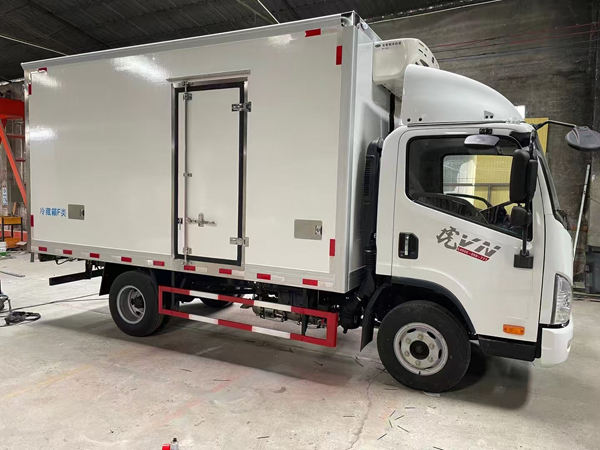
To fully grasp the value proposition, it is essential to compare the fibreglass panel for refrigerated trailer with conventional materials.
While aluminum is lightweight, it is a conductor of heat, making it less energy-efficient unless used in a complex thermal break system. Aluminum is also prone to denting and corrosion. The fibreglass reinforced polyester resin panel offers superior insulation in a monolithic design, better impact resistance, and complete corrosion immunity.
Plywood faced with Fiberglass Reinforced Plastic (FRP) is a common budget option. However, plywood is organic and can absorb moisture, leading to rot, mold, and a loss of structural and insulating properties. The all-composite, non-organic nature of a true fibreglass polyester resin wall panel eliminates this risk entirely, providing a more durable and reliable long-term solution.
The use of the fibreglass polyester panel for trailer body extends across the entire cold chain.
From fresh produce requiring precise humidity control to frozen goods needing temperatures as low as -30°C, and even high-value pharmaceuticals demanding an unbroken cold chain, the fibreglass reinforced polyester resin wall panel provides the consistent thermal barrier necessary for all these applications. Its smooth, non-porous interior also facilitates easier cleaning and meets high hygiene standards for food transport.
The installation of a reinforced polyester panel system requires specialized knowledge. Panels are typically joined using strong structural adhesives and mechanical fasteners in a way that maintains thermal integrity. Maintenance is straightforward, primarily involving cleaning and inspecting the seams and joints. The inherent durability of the fibreglass reinforced polyester panel means that repairs are less frequent than with other materials.
The evolution of the fibreglass reinforced polyester resin wall panel continues, driven by the demands for greater efficiency and sustainability.
Ongoing R&D focuses on developing even lighter panels with higher strength and improved insulation values (lower K-factors). This involves innovations in foam chemistry and fibreglass weaving techniques, pushing the performance boundaries of the fibreglass polyester panel.
The environmental footprint of materials is increasingly important. While the recyclability of composite materials is a challenge, the industry is making strides. The long service life and fuel savings offered by a fibreglass panel for refrigerated trailer contribute significantly to its life-cycle sustainability by reducing emissions. Furthermore, research into thermochemical recycling processes for composites is promising for the future.
In conclusion, the fibreglass reinforced polyester resin wall panel is far more than just a building material; it is a precision-engineered solution designed to overcome the specific challenges of refrigerated transport. Its unmatched combination of thermal efficiency, structural robustness, corrosion resistance, and lightweight properties makes it the superior choice over traditional alternatives like aluminum and plywood. As the global cold chain becomes more complex and standards for efficiency and cargo integrity rise, the role of this advanced composite will only become more central. For any fleet operator or manufacturer seeking to optimize performance, reduce operational costs, and ensure the highest level of cargo protection, investing in a trailer body constructed with a high-quality fibreglass reinforced polyester panel is a strategically sound and forward-thinking decision.
Contact us:
Email: lzpanels@163.com
WhatsApp/Wechat


