
- All
- Product Name
- Product Keyword
- Product Model
- Product Summary
- Product Description
- Multi Field Search
 |


| Quantity: | |
|---|---|
The trailer manufacturing industry stands at the precipice of a transformative era, driven by innovative materials and processing methods that challenge conventional production limitations. Among these advancements, the development of large fiberglass panel solutions in coil form represents a fundamental reimagining of how trailer bodies are conceptualized, designed, and fabricated. This revolutionary approach moves beyond traditional sheet-by-sheet processing to introduce unprecedented efficiency, structural integrity, and design flexibility. Specifically engineered in extraordinary widths of 2.6 meters, 2.7 meters, and 2.8 meters, these large fiberglass sheet materials are poised to redefine industry standards for both dry freight and refrigerated trailer applications. The coil format itself marks a departure from established practices, offering manufacturers a streamlined pathway from raw material to finished trailer with minimal waste and maximum performance. This article explores the multifaceted advantages of this innovative material format, examining its implications for structural design, thermal efficiency, production economics, and ultimately, the future trajectory of trailer manufacturing worldwide.
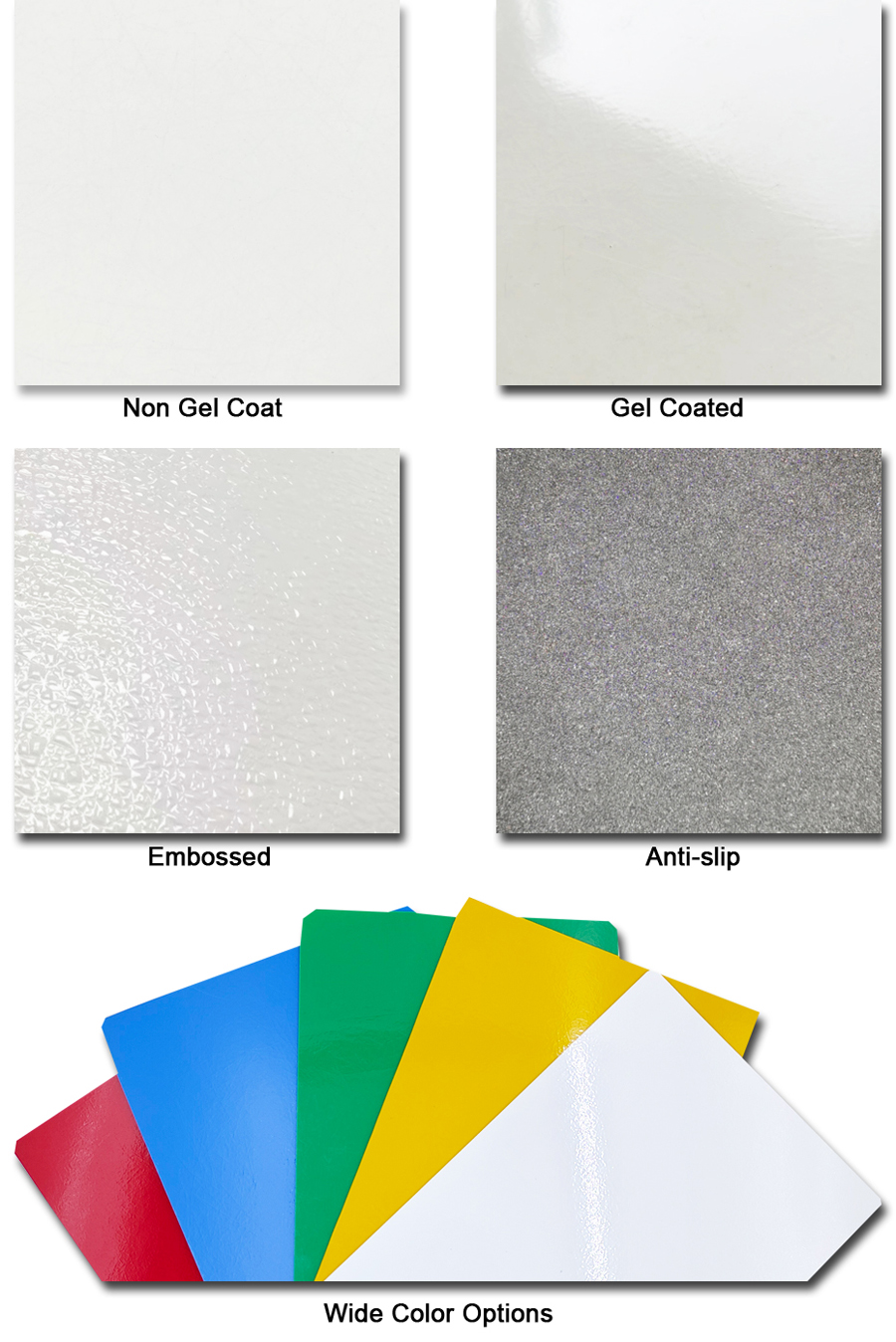
At its core, a large fiberglass panel in coil represents a significant technological advancement in composite material processing. Unlike traditional rigid sheets that arrive as discrete, flat units, these innovative panels are manufactured as continuous, flexible rolls that can be precisely unwound and processed according to specific production requirements. The base material consists of high-strength fiberglass reinforcement, typically in thicknesses of 1.5mm or 2mm, engineered with exceptional flexibility and memory retention to withstand the coiling and uncoiling process without compromising structural integrity. This unique format enables manufacturers to access large fiberglass sheet materials in widths previously unimaginable in coil form, specifically addressing the dimensional requirements of modern trailer manufacturing. The coil format fundamentally transforms these composite materials from static components into dynamic, process-friendly resources that adapt to manufacturing workflows rather than forcing workflows to adapt to material limitations.
The production of large fiberglass sheet in coil format represents a triumph of materials engineering and manufacturing innovation. Creating fiberglass composites of such substantial width—particularly the impressive large fiberglass sheet 2.8meter variants—while maintaining consistent properties throughout the coil requires precision control over every aspect of the manufacturing process. Advanced impregnation systems ensure uniform resin distribution across the entire width, while tension-controlled winding mechanisms prevent distortion, wrinkling, or stress concentration that could compromise the material's performance. The manufacturing process must balance flexibility for coiling with the rigidity required for trailer applications, achieving this through sophisticated resin formulations and fiber orientation techniques. This careful engineering results in a material that arrives at the manufacturing facility not as a problem to be solved, but as a solution ready for implementation.
The availability of large fiberglass sheet 2.6meter width addresses specific engineering and design requirements in trailer manufacturing. This dimension provides an optimal balance between material handling efficiency and application versatility, particularly for specialized trailer designs where standard widths fall short. The large fiberglass panel 2.6meter variant enables manufacturers to create trailer side walls with minimized seams in certain designs, while also serving as an ideal solution for complex curvature requirements where slightly narrower widths facilitate forming processes. The dimensional precision of these panels ensures that every centimeter of the 2.6-meter width contributes to structural performance, eliminating the material waste traditionally associated with trimming standard-sized sheets to fit specific trailer designs.
Positioned as a versatile middle option, the large fiberglass sheet 2.7meter width caters to a broad spectrum of trailer manufacturing applications. This dimension has emerged as something of an industry sweet spot, providing sufficient width to minimize seams in many standard trailer designs while remaining manageable within existing production environments. The large fiberglass panel 2.7meter format particularly shines in high-volume manufacturing settings where incremental efficiency gains translate to substantial competitive advantages. The 2.7-meter width demonstrates the manufacturers' understanding of real-world production requirements, offering a practical compromise between the extreme widths and standard dimensions that often force design compromises.
Representing the pinnacle of current manufacturing capability, the large fiberglass sheet 2.8meter width constitutes a genuine breakthrough in trailer body construction. This extraordinary dimension, available in coil form as large fiberglass panel 2.8meter, enables the creation of seamless trailer side walls that were previously impossible without resorting to heavier, less efficient materials. The near-mythical pursuit of a truly seamless trailer side panel becomes reality with this width, eliminating structural weak points and potential leak paths while dramatically enhancing aesthetic appeal. The large fiberglass panel 2.8meter variants particularly benefit refrigerated trailer applications where thermal bridging at seam points traditionally compromises insulation efficiency. This width represents not just an incremental improvement, but a fundamental redefinition of what's possible in trailer manufacturing.
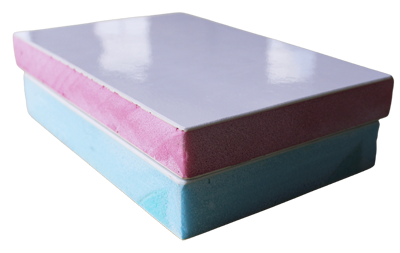
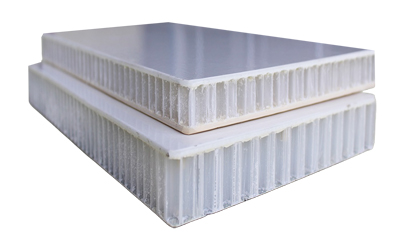
The adoption of large fiberglass panel in coil format instigates a comprehensive transformation in trailer manufacturing efficiency. Unlike traditional sheet processing that requires individual handling, positioning, and alignment of discrete panels, the coil format enables continuous, automated processing that dramatically reduces labor requirements and production time. Manufacturers can implement roll-to-panel or even roll-to-complete-wall processing systems that uncoil, measure, cut, and position materials with precision impossible through manual methods. This continuous processing approach particularly benefits high-volume production environments where time savings compound exponentially across multiple shifts and production lines. The large fiberglass sheet in coil format essentially transforms trailer wall production from a batch process to a continuous flow operation, with corresponding benefits in inventory management, floor space utilization, and production planning flexibility.
The availability of extra-wide large fiberglass panel materials in coil form directly addresses one of the most persistent challenges in trailer body engineering: structural weakness at panel joints. Traditional manufacturing methods requiring multiple panel sections joined together create inherent stress concentration points and potential failure initiation sites. By enabling virtually seamless construction, particularly with the large fiberglass panel 2.8meter width, manufacturers can distribute structural loads evenly across the entire trailer surface. This seamless approach enhances durability against road-induced vibrations, impact resistance, and overall trailer lifespan. The continuous nature of coil-based manufacturing further ensures consistent fiber orientation and resin distribution throughout the trailer structure, eliminating the variability introduced by joining discrete panels with potentially different material properties.
Beyond pure manufacturing efficiency, the large fiberglass sheet in coil format unlocks unprecedented design freedom for trailer manufacturers. The continuous material supply enables custom length production without the constraints of standard sheet sizes, allowing manufacturers to accommodate special orders and unique specifications without compromising production efficiency. This flexibility extends to complex curvature requirements, as the coil format more readily accommodates gradual forming processes compared to rigid sheets. The design possibilities afforded by large fiberglass panel in coil materials particularly benefit specialized trailer applications where standard dimensions prove limiting. Manufacturers can now approach trailer design from a "form follows function" perspective rather than being constrained by material availability, knowing that the coil format can adapt to their vision rather than forcing compromise.
The true potential of large fiberglass sheet materials reveals itself when integrated with various core materials to form sophisticated composite structures. The compatibility of these panels with polyurethane (PU), extruded polystyrene (XPS), expanded polystyrene (EPS) foam cores, and polypropylene (PP) honeycomb structures creates a versatile platform for tailoring trailer properties to specific application requirements. The large fiberglass panel 2.7meter width, for instance, provides an ideal facing material for foam cores in refrigerated applications, where the extra width minimizes thermal bridges at seams. Similarly, the large fiberglass sheet 2.6meter variants offer excellent forming characteristics for complex curvature applications when combined with flexible core materials. The coil format enhances this compatibility by enabling continuous lamination processes that ensure perfect bonding between facing and core materials without the interruptions inherent in sheet-by-sheet processing.
The versatility of large fiberglass panel materials in coil form extends across the trailer spectrum, from standard dry freight containers to sophisticated refrigerated units. In dry freight applications, the seamless construction enabled by extra-wide large fiberglass sheet materials enhances structural rigidity and protects cargo from moisture intrusion through minimized seams. For refrigerated applications, the thermal efficiency of continuous panels—particularly the large fiberglass panel 2.8meter width—proves invaluable in maintaining consistent temperatures while reducing insulation thickness requirements. The moisture resistance inherent in properly manufactured fiberglass composites further safeguards against core material degradation in high-humidity environments. This dual applicability allows manufacturers to standardize their facing material inventory while producing trailers for diverse applications, simplifying procurement and reducing inventory complexity.
Perhaps the most immediate advantage of implementing large fiberglass sheet in coil format is the virtual elimination of panel joints in trailer manufacturing. Traditional production methods require precise alignment, sealing, and reinforcement where individual panels meet—a time-consuming process that introduces quality control variables at every joint. With the extra-wide dimensions of large fiberglass panel 2.8meter and even the large fiberglass sheet 2.7meter variants, manufacturers can produce entire trailer sides without intermediate seams. This seamless approach translates directly to reduced labor hours, eliminated consumables (adhesives, fasteners, sealants), and accelerated production cycles. The cumulative effect across multiple trailer production lines can fundamentally impact manufacturing economics, transforming panel joint elimination from a theoretical advantage to a concrete competitive edge.
The coil format of these large fiberglass panel materials introduces unprecedented efficiency in material utilization. Traditional sheet-based manufacturing inevitably generates trim waste as standard panel sizes are adapted to trailer dimensions. In contrast, the large fiberglass sheet in coil format enables manufacturers to precisely unroll and cut exactly the required length for each application, minimizing waste to theoretical minimums. This precision cutting capability, combined with the extra-wide dimensions that reduce or eliminate end joints, results in material utilization rates that sheet-based processing cannot approach. The economic benefits extend beyond simple material cost savings to include reduced waste disposal expenses and improved sustainability metrics—increasingly important considerations in modern manufacturing environments.
From an operational perspective, the large fiberglass panel in coil format revolutionizes production planning and inventory management. Coiled materials typically feature a significantly smaller storage footprint compared to equivalent square footage of rigid sheets, freeing valuable factory space for production activities. The standardized coil format also simplifies material handling through conventional rolling equipment, reducing the specialized infrastructure required for oversized sheet manipulation. Perhaps most importantly, the continuous nature of coil materials provides manufacturing flexibility, allowing production lines to quickly switch between different trailer lengths and specifications without material changeover delays. This flexibility proves particularly valuable in today's manufacturing environment, where batch sizes are decreasing and customization requirements are increasing.

Successfully implementing large fiberglass sheet materials in coil form requires appropriate handling and processing equipment designed specifically for these extraordinary dimensions. The impressive width of large fiberglass panel 2.8meter variants, in particular, demands specialized uncoiling, guiding, and cutting systems capable of maintaining material integrity throughout the process. Manufacturers must consider floor space requirements for coil handling equipment, tension control systems to prevent material distortion, and precision cutting mechanisms capable of processing the substantial width without deflection. While these infrastructure requirements represent initial investment, they typically deliver rapid return through labor savings, material efficiency, and production acceleration. The equipment landscape for processing large fiberglass sheet in coil formats continues to evolve as more manufacturers recognize the advantages, with increasingly sophisticated and cost-effective solutions entering the market.
Maintaining consistent quality with large fiberglass panel materials in coil form requires adapted quality assurance protocols specifically designed for continuous processing environments. Unlike sheet-by-sheet inspection practical with discrete panels, coil-based manufacturing benefits from inline monitoring systems that continuously verify critical parameters including thickness consistency, surface quality, and structural integrity. The extraordinary width of these materials—particularly the large fiberglass sheet 2.8meter variants—demands comprehensive across-the-width monitoring to ensure edge-to-edge consistency. Advanced manufacturers implement automated vision systems, thickness profiling, and even ultrasonic inspection directly within the processing line to identify potential issues before they affect finished trailer quality. These quality assurance adaptations represent an evolution in manufacturing philosophy from batch checking to continuous verification, with corresponding improvements in consistency and defect prevention.
While initially developed for trailer applications, the advantages of large fiberglass panel materials in coil form are finding applications beyond their original intended use. The construction industry increasingly adopts these materials for architectural elements, permanent structural forms, and building enclosures where the combination of width, durability, and processing efficiency delivers compelling advantages. Similarly, the marine industry recognizes the potential of seamless construction enabled by large fiberglass sheet 2.7meter and wider variants for boat hulls and superstructure components. This cross-industry adoption drives further innovation in material formulations and processing technologies, creating a virtuous cycle of improvement that benefits all application sectors. The fundamental advantages of the coil format—efficiency, seam reduction, and processing flexibility—prove universally valuable across multiple industries facing similar manufacturing challenges.
The current generation of large fiberglass sheet in coil materials represents not the culmination of development, but rather a promising starting point for further innovation. Material scientists are exploring enhanced resin systems that increase flexibility for tighter coiling while maintaining rigidity in the final application. Fiber architecture innovations aim to optimize strength-to-weight ratios specifically for the unique demands of the coiling and uncoiling process. From a processing perspective, equipment manufacturers are developing increasingly integrated systems that combine uncoiling, composite formation, and finishing in continuous lines specifically designed for large fiberglass panel materials. These parallel development streams—in both materials and processes—ensure that the advantages of coil-form fiberglass will continue to expand, offering trailer manufacturers ever-improving performance and efficiency.
The advent of extra-wide large fiberglass panel materials in coil form represents far more than an incremental improvement in trailer manufacturing materials. It constitutes a fundamental reimagining of the production process itself, challenging long-established practices and unlocking new possibilities in design, efficiency, and performance. The availability of specific widths including large fiberglass sheet 2.6meter, large fiberglass sheet 2.7meter, and the groundbreaking large fiberglass sheet 2.8meter variants provides manufacturers with previously unavailable options for creating stronger, more efficient, and more competitive trailer products. The coil format itself transforms these composite materials from static components into dynamic manufacturing resources that adapt to production requirements rather than constraining them.
For forward-thinking trailer manufacturers, the question is no longer whether to adopt large fiberglass panel in coil technology, but how quickly they can integrate it into their production workflows. The competitive advantages—from seamless construction and reduced labor to enhanced design flexibility and material utilization—create compelling business cases for adoption across both dry freight and refrigerated trailer segments. As the industry continues to evolve toward higher efficiency and greater customization, those manufacturers who embrace this revolutionary material format will find themselves positioned at the forefront of their industry, ready to meet tomorrow's challenges with today's most advanced composite solution.
Contact us:
Email: lzpanels@163.com
WhatsApp/Wechat: 008613702432446


