
- All
- Product Name
- Product Keyword
- Product Model
- Product Summary
- Product Description
- Multi Field Search
 |


| Quantity: | |
|---|---|
In the demanding environment of commercial food service, walls and surfaces must withstand constant assault from moisture, grease, chemicals, and physical impact. This is where commercial kitchen FRP panels rise to the occasion. FRP panel, or Fiberglass Reinforced Plastic, is a composite material made by combining a polymer resin with strong fiberglass reinforcement. The result is an exceptionally durable, yet lightweight, sheet product ideal for cladding walls in kitchens, prep areas, walk-in coolers, and wash-down spaces. The white kitchen FRP sheet, in particular, has become a ubiquitous standard. Its popularity is not merely aesthetic; the classic white hue, typically achieved through a pigmented gel coat finish, signifies a surface engineered for hygiene, durability, and ease of maintenance. This comprehensive guide delves into the specifics of white color commercial kitchen FRP wall panel sheets, exploring their properties, benefits, and applications through detailed explanations and a helpful Q&A format.
At its core, a kitchen FRP panel is a manufactured building material designed specifically for high-moisture and high-traffic areas. It is not a paint or a laminate, but a solid, homogeneous sheet. The manufacturing process involves saturating a mat of fiberglass strands with a thermosetting resin (usually polyester or vinylester). This mixture is then cured under controlled conditions to form a rigid sheet. The front surface receives a specialized gel coat—a thick, resin-rich layer that is pigmented (white, in this case) and formulated to create an impervious, non-porous face. This smooth kitchen FRP panel surface is integral to the product, not a later addition, which is key to its longevity and performance.
The distinctive white appearance of a white kitchen FRP panel is more than just color. The gel coat is the workhorse of the product, defining its functional characteristics:
Smooth and Non-Porous: The cured gel coat creates a smooth kitchen FRP sheet surface with virtually no pores for bacteria, mold, grease, or moisture to penetrate. This seamless quality is fundamental for sanitary environments.
Easy to Clean: Due to its non-porous nature, spills, splatters, and grime sit on the surface. Most contaminants can be wiped away with a damp cloth or easily cleaned with common commercial kitchen cleaners without fear of staining or degradation.
Inherently Stain-Resistant: The high-density gel coat resists staining from food products, oils, and many chemicals, helping to maintain the bright, clean white kitchen FRP sheet appearance over time.
Durable and Impact Resistant: While the surface is smooth, the fiberglass reinforcement beneath provides remarkable strength, making the kitchen FRP wall sheet resistant to dents, scratches, and minor impacts that would damage drywall or tile.
The smooth kitchen FRP panel surface leaves no hiding places for pathogens. Unlike grouted tile walls where grout lines can harbor bacteria and mold, FRP panels can be installed with minimal seams. Their impervious nature allows for frequent and aggressive cleaning with steam, pressure, or chemical disinfectants, which is a regulatory requirement in many food service establishments.
Commercial kitchen FRP sheets are completely waterproof. They will not warp, rot, swell, or delaminate when exposed to constant humidity, steam, or direct water spray. This makes them perfect for areas adjacent to sinks, dishwashers, cooking lines, and inside cold storage units. They also resist corrosion from food acids, cleaning agents, and grease.
While the initial investment may be higher than paint or cheap wall coverings, a kitchen FRP wall panel system offers a far better lifecycle cost. It does not require frequent repainting, regrouting, or replacement due to water damage. Its resilience reduces maintenance downtime and costs, providing a reliable wall surface for many years.
Kitchen FRP sheets are lightweight and can be installed directly over existing sound surfaces like drywall, concrete, or block using adhesives and mechanical fasteners. This can often be done without a complete kitchen shutdown, minimizing business disruption.
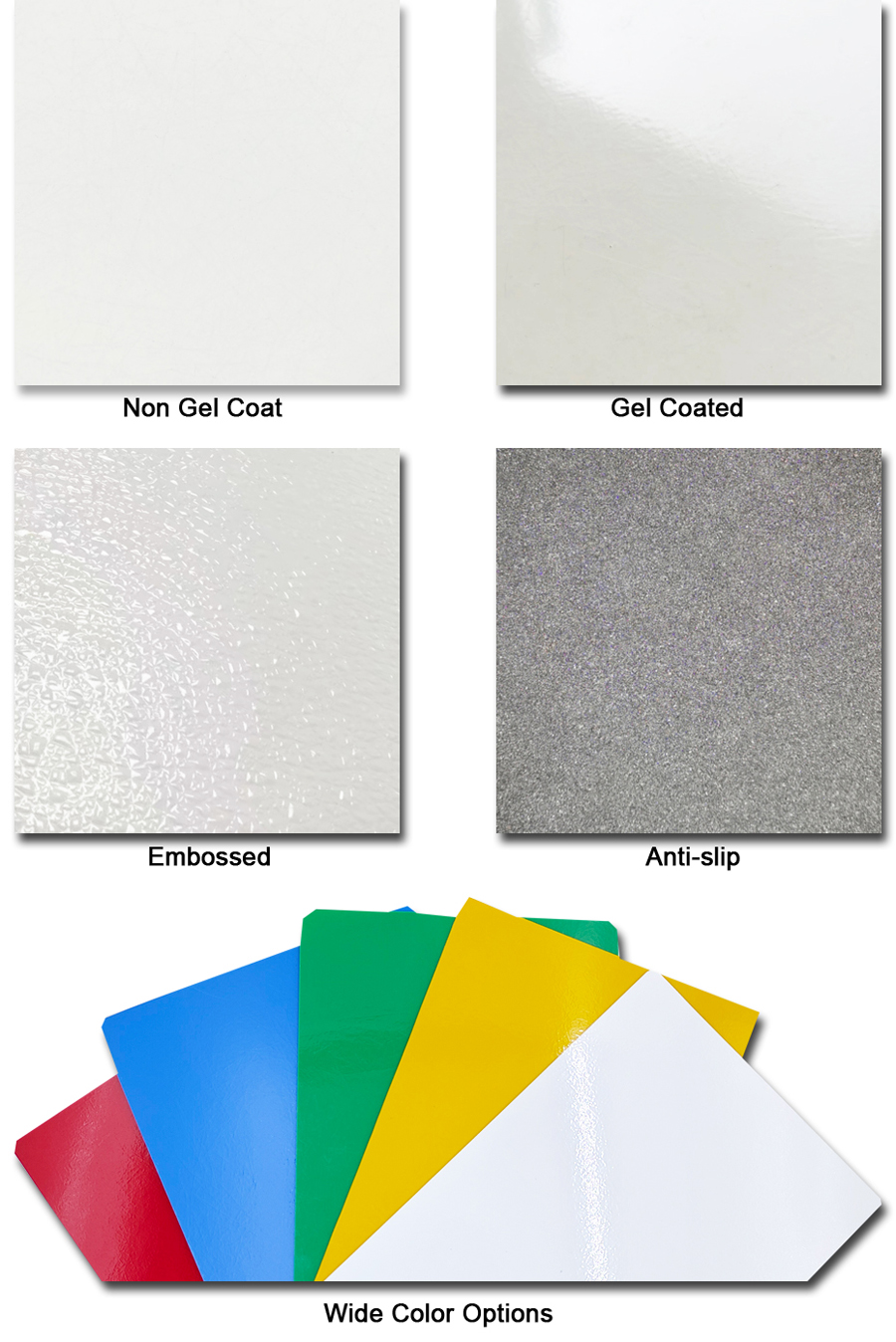
A: Tile walls, while durable, have a critical weakness: grout lines. Grout is porous and can absorb moisture, grease, and food particles, becoming a breeding ground for mold, mildew, and bacteria. Regular sealing is required but often fails over time. A smooth kitchen FRP sheet, by contrast, presents a continuous, non-absorbent barrier. There are no grooves or pores for contaminants to lodge in. The entire wall can be wiped or sprayed down, and any biological or organic matter is removed from the surface entirely. This seamless quality is why health inspectors often favor FRP in critical food preparation zones.
A: High-quality white commercial kitchen FRP panels are manufactured with UV-stabilized and stain-resistant gel coats to prevent yellowing and staining. While extreme, direct prolonged UV exposure (like in a sunroom) can potentially cause discoloration, this is rarely an issue in interior kitchen settings. The gel coat's chemical structure resists staining from common kitchen substances. However, it is always recommended to clean spills promptly and avoid abrasive cleaners or scouring pads that could microscopically scratch the surface, which could, over years, make it easier for deeply pigmented substances to cling.
A: The terms often relate to thickness, fire rating, and gel coat quality. A standard kitchen FRP sheet might be adequate for a low-moisture residential application. A commercial kitchen FRP panel is engineered for professional use. It is typically thicker (e.g., 0.09" to 0.125" or more), providing greater impact resistance. Crucially, commercial-grade panels often carry a Class A (or Class 1) Fire Spread Rating, meaning they have very low flame spread and smoke development properties—a vital safety code requirement for commercial establishments. The gel coat on a commercial panel is also usually formulated to be more resistant to a broader range of chemicals and cleaners.
A: Kitchen FRP wall sheets are typically installed using a high-strength construction adhesive applied to the substrate, combined with mechanical fasteners at seams and corners for added security. The panels can be trimmed with standard woodworking tools. Regarding temperature, FRP is an excellent choice for both hot and cold extremes. It will not become brittle and crack in freezer applications, nor will it soften or deform near ovens or steam lines (within its specified temperature range, typically from -40°F to +180°F). Its thermal stability and moisture resistance make it the premier wall lining for walk-in coolers and freezers, where condensation is a constant challenge for other materials.
A: On the contrary, it is famously easy to maintain, which is a primary selling point. Routine maintenance involves simple wiping with a mild detergent and water. For grease, a degreasing cleaner can be used. For disinfection, most common hospital-grade or food-service-grade disinfectants are compatible (always check the manufacturer's guidelines). The key is to avoid highly abrasive cleaners or metal scouring pads, as these can dull the high-gloss finish of the smooth kitchen FRP panel over many cleanings. The low maintenance is a direct result of the durable, inert gel coat surface.

The versatility of white commercial kitchen FRP wall panel sheets makes them suitable for nearly every area in and around a food service facility:
Primary Cooking and Prep Lines: Behind ranges, griddles, fryers, and prep tables.
Dishwashing and Pot Wash Areas: Where walls face constant water and chemical spray.
Walk-in Coolers and Freezers: As a hygienic, moisture-proof lining that withstands condensation and cold.
Food Storage and Dry Storage Areas: Providing a clean, bright, and easy-to-clean surface.
Restaurant Bathrooms and Corridors: Offering durability and water resistance in high-traffic public areas.
Hospital and Institutional Kitchens: Where sanitation standards are paramount.
Not all FRP is created equal. When specifying a commercial kitchen FRP sheet, consider:
Thickness: Opt for a minimum of 0.09" for commercial applications; 0.125" for areas with high risk of impact.
Fire Rating: Ensure the panel has a Class A/ASTM E-84 fire rating for compliance with commercial building codes.
Gel Coat Quality: Inquire about stain and chemical resistance specifications. A higher-grade isophthalic gel coat offers better performance than standard orthophthalic.
Manufacturer Certification: Look for products from reputable manufacturers that provide technical data sheets and warranties.
Profile: While flat, smooth kitchen FRP panels are standard, some come with textured or patterned finishes for a different aesthetic or added grip in certain areas.
The white color commercial kitchen FRP wall panel sheet represents a convergence of practicality, hygiene, and durability. Its bright white kitchen FRP panel finish, achieved through a high-performance gel coat, provides a clean, reflective surface that enhances lighting and signals cleanliness. The underlying strength of the fiberglass composite delivers unparalleled resistance to moisture, impact, and corrosion. As explored in our Q&A, its advantages over traditional materials like tile are significant, particularly in terms of creating a seamless, sanitizable barrier.
For any business owner, facility manager, or designer specifying materials for a commercial kitchen, food processing plant, or any high-humidity area, investing in a quality kitchen FRP wall panel system is a decision that pays dividends in the long run. It reduces lifecycle maintenance costs, supports stringent health code compliance, and provides a durable, reliable wall surface that will look professional and perform flawlessly for decades. When you choose a smooth kitchen FRP sheet, you are not just choosing a wall covering; you are investing in the operational integrity and sanitary foundation of your facility.
Contact us:
Email: lzpanels@163.com
WhatsApp/Wechat: 008613702432446


