
- All
- Product Name
- Product Keyword
- Product Model
- Product Summary
- Product Description
- Multi Field Search
 |


| Quantity: | |
|---|---|
In the demanding world of dairy processing, where hygiene, durability, and cleanliness are non-negotiable, the choice of wall and ceiling materials is a critical operational decision. Enter the FRP panel, or Fiberglass Reinforced Plastic panel, a material engineered to excel in precisely these challenging conditions. This guide delves deep into the specifications, benefits, and applications of a specific high-performance category: the White FRP panel with chopped strand mat. Designed in industry-standard sizes of 4x9' and FRP panel 4x10', and available in crucial thicknesses of 1.2mm, 1.5mm, 2mm, and 3mm, these panels represent a gold standard for FRP panel for dairy factory installations. We will explore how this versatile cladding solution provides a seamless, impervious, and easily cleanable surface that meets the stringent requirements of food production facilities.
At its heart, an FRP panel with chopped strand mat is a composite material. It is manufactured by combining a thermosetting polyester resin with a reinforcement of randomly oriented glass fibers, known as a chopped strand mat (CSM). This mat is key to the panel's strength and impact resistance. The resin is cured to form a hard, rigid sheet, and in the case of dairy applications, the surface is typically finished with a non-porous, high-gloss gel coat. This specific construction method differentiates it from other wall panels and is fundamental to its performance. The white FRP panel is not merely painted; its color and smooth finish are integral to the gel coat layer, ensuring it won't chip, flake, or harbor bacteria.
The chopped strand mat is the backbone of the panel's structural integrity. Unlike woven rovings, the random orientation of the glass fibers distributes stress evenly in all directions. This results in a panel that is exceptionally resistant to impact, cracking, and mechanical damage—common occurrences in busy industrial environments like a dairy. When specifying an FRP panel 4x9 or FRP panel 4x10 for a facility, this built-in durability translates to lower long-term maintenance costs and less downtime for repairs.
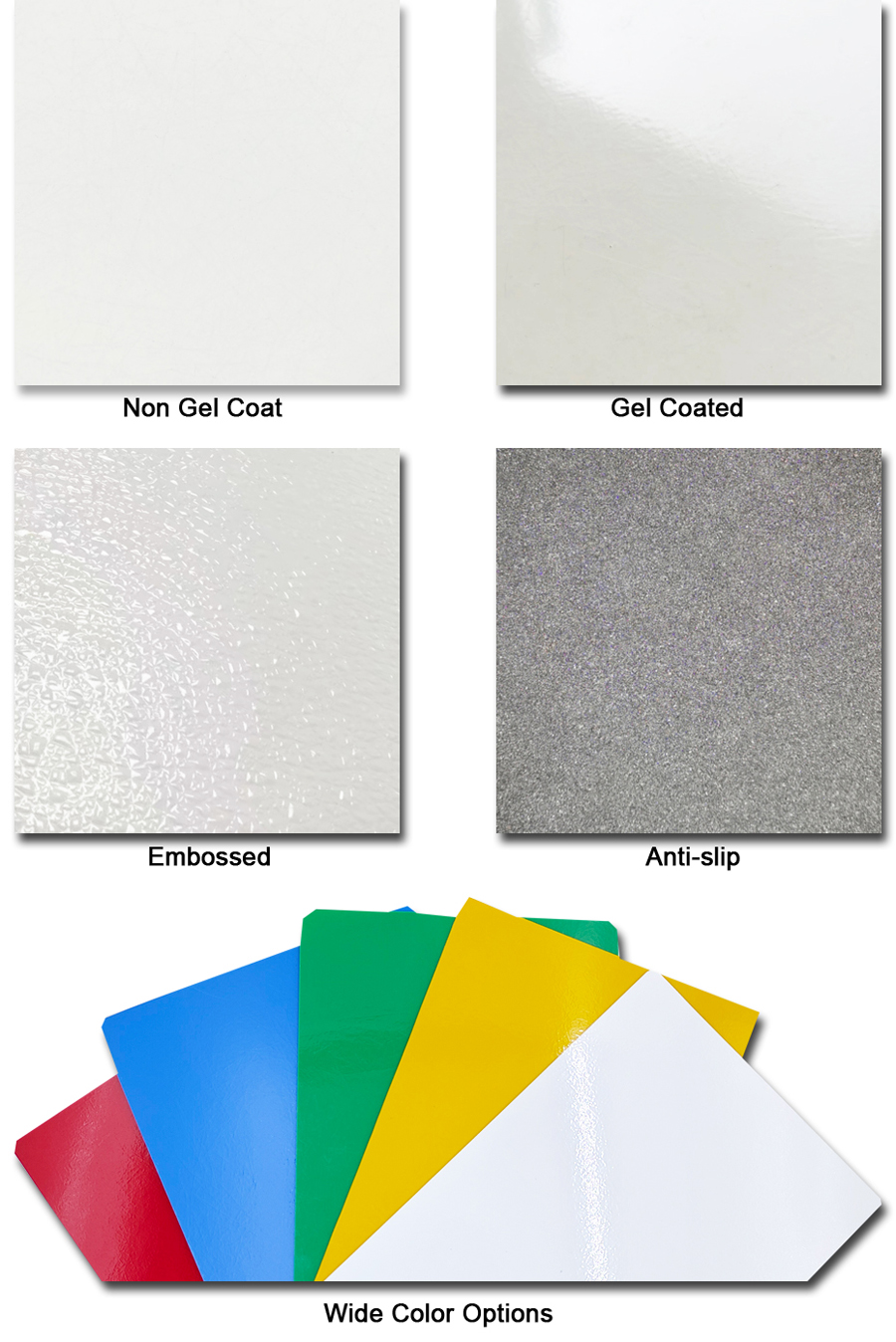
The primary reason for selecting a white FRP panel for dairy factory walls is its impeccable hygienic properties. The non-absorbent, glossy surface prevents moisture penetration, eliminating the risk of mold, mildew, and bacterial growth within the wall substrate. It withstands daily washdowns with hot water, steam, and harsh cleaning chemicals, including acids and caustic solutions used in sanitation cycles. The bright white FRP panel finish also improves lighting efficiency and makes contamination instantly visible, a critical factor in food safety protocols.
Dairy environments are perpetually wet and exposed to a variety of substances, from milk fats and sugars to cleaning agents. A quality FRP panel acts as a complete moisture barrier, protecting the underlying wall structure from rot, corrosion, and degradation. This resistance extends to a wide pH range, ensuring the panel's surface and structural properties remain unchanged over years of aggressive cleaning.
The combination of the resin matrix and the chopped strand mat creates a wall covering that is tough and long-lasting. It resists dents, scratches, and abrasions far better than painted drywall or metal. This durability means a white FRP panel with chopped strand mat installation requires minimal upkeep—typically just routine cleaning—and boasts an exceptionally long service life, providing an excellent return on investment.
The FRP panel 4x10 is arguably the most common and versatile size for commercial and industrial applications. Its dimensions make it ideal for covering standard wall heights in many dairy processing areas, loading bays, and storage coolers with minimal waste and fewer seams. Fewer seams mean fewer potential areas for moisture ingress and biofilm formation, enhancing overall hygiene. The 10-foot length allows for efficient installation on high walls, reducing labor time and material handling.
Similarly, the FRP panel 4x9 offers a strategic size for areas with specific height requirements or where handling slightly smaller sheets is more practical. It is equally effective in creating seamless, hygienic walls in spaces like laboratories, smaller processing rooms, or as a wainscoting solution. Both the FRP panel 4x9 and 4x10 can be easily trimmed on-site with standard carpentry tools, allowing for perfect fits around doors, windows, and equipment.
The thickness of an FRP panel is a critical determinant of its stiffness, impact resistance, and overall performance. Selecting the correct gauge is essential for the specific demands of each area within a dairy factory.
The 1.2mm white FRP panel is the lightest gauge commonly available. It is a cost-effective choice for light-duty applications where high impact resistance is not the primary concern. Its flexibility makes it uniquely suitable for covering curved walls or columns, creating a seamless hygienic surface where traditional rigid panels cannot. It is often used in areas with lower risk of physical contact.
The 1.5mm white FRP panel is considered the industry standard for most vertical wall applications. It offers an excellent balance of rigidity, impact resistance, and cost. This thickness is highly recommended for the majority of wall coverings in a dairy factory, including processing halls, packaging areas, and cold storage, where it provides durable and reliable protection.
For areas subject to more frequent contact from equipment, carts, or pallets, the 2mm white FRP panel is the superior choice. The added thickness provides significantly greater impact resistance and rigidity, reducing the likelihood of damage. This gauge is ideal for corners, loading docks, corridors, and any zone where the walls are more vulnerable to abrasion and bumps.
The 3mm white FRP panel represents the heavyweight champion of FRP wall panels. It is designed for the most demanding environments where extreme durability is required. This includes areas with very high-impact potential, such as around heavy machinery, or in facilities that process large, hard objects. While at a higher price point, its longevity in severe conditions can make it the most economical choice over time.

A successful FRP panel for dairy factory installation starts with a properly prepared substrate. Walls must be flat, dry, and structurally sound. Panels are typically installed over a moisture-resistant backing like concrete, cement board, or treated plywood using a combination of adhesive and mechanical fasteners. Framing (studs) should be spaced appropriately—usually 16 or 24 inches on center—to support the chosen panel thickness without bowing.
To maintain the integrity of the hygienic barrier, all panel joints, corners, and transitions to ceilings, floors, and doors must be properly sealed. This is done using FRP-specific sealants and moldings, such as coving (coved corners). Coved base corners and wall-to-ceiling coves are especially important in dairy plants, as they eliminate sharp 90-degree angles where dirt and bacteria can accumulate, making cleaning effortless and effective.
Ensure the installation area is well-ventilated during and after installation, especially when using solvent-based adhesives. Always verify that the specific FRP panel with chopped strand mat product selected complies with relevant local building codes, food safety regulations (like those from the FDA or USDA), and fire safety standards for your region and application.
Maintaining a white FRP panel installation is straightforward. For daily cleaning, a soft cloth or mop with a mild detergent and warm water is sufficient. For more rigorous sanitation, use non-abrasive cleaners. Avoid using steel wool or harsh scouring pads, as these can dull the high-gloss gel coat finish over time. The easy-clean surface is a key feature that keeps long-term maintenance costs low.
Periodically inspect the installation for any signs of damage, such as deep scratches or impacts that have penetrated the gel coat. While minor surface scratches are typically cosmetic, deeper damage should be repaired using an FRP repair kit to restore the waterproof and hygienic barrier. Ensuring that sealant at joints remains intact is also a crucial part of routine inspections.
Selecting the right wall covering is a foundational decision in designing a safe, efficient, and compliant dairy processing facility. The white FRP panel with chopped strand mat, available in practical FRP panel 4x9 and FRP panel 4x10 sizes and a range of thicknesses from the lightweight 1.2mm white FRP panel to the ultra-robust 3mm white FRP panel, provides a comprehensive solution. It delivers the mandatory trifecta of hygiene, durability, and low maintenance. By understanding the specific roles of the 1.5mm white FRP panel as a standard and the 2mm white FRP panel for added protection, specifiers and facility managers can make informed choices that protect their product, their people, and their investment for decades. For any FRP panel for dairy factory project, this material stands out as a proven, reliable, and smart choice for superior wall performance.
Contact us:
Email: lzpanels@163.com
WhatsApp/Wechat: 008613702432446


